

If you, like me, watched enthralled as Australia won the Women’s and Fiji won the Men Olympic Rugby 7s Gold then hopefully you agree we have seen a fantastic showcase for the game of Rugby 7s. From the excitement and fast paced action of the games where, on their day, any team can beat any other, to the sportsmanship of the players and the incredible humility displayed by the Fijian team when they received their medals.
 |
| Fiji Men Win Rugby 7s Gold & Global Respect In Rio 2016 |
In among it all you may have noticed that the 12 teams in each tournament are not necessarily the teams you would have expected if you don’t follow the 7-a-side code. Who would have thought that the likes of Ireland, South Africa and Samoa would not have competed in the Women’s competition when the likes of Columbia, Japan and Spain were there. Or in the Men’s competition there would be no Ireland, Samoa, Tonga, Italy or Canada all of whom you would, quite reasonably, expect to be present at a 15-a-side RWC.
Given these quite possibly weren’t the National Teams you were expecting you could easily be forgiven for not having heard of almost all of the players involved as well. You aren’t alone, Woodward and Butler demonstrated an almost comical lack of knowledge of Rugby 7s in their “commentary”. Woodward’s constant mixing up of players and his suggestion to team GB in the final seconds of the semi final of “kick it long” will live long in the memory!
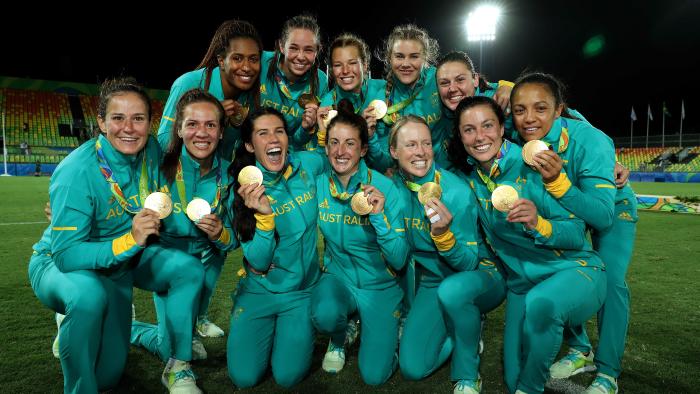 |
| Australia Ladies Win Gold In Rio 2016 |
If you believe the traditional rugby press before the Olympics, you’d be excused for thinking that all of the “Rugby Superstars” had stayed away. The truth, of course, is somewhat different in that Rugby 7s has it’s own superstars and has done for a while now. Without sufficient preparation and conditioning the superstars the media referred to were never going to make the cut for Rio. Many tried and failed such as Quade Cooper, Liam Messum or Bryan Habanna. Of course some have made it but almost to a player they have got previous Rugby 7s experience on the World Series earlier in their careers. Sonny Bill Williams (sadly injured in New Zealand’s opening game) is possibly the exception. However his much lauded off loading game might well be considered the norm in Rugby 7s particularly by the insanely gifted Fijian players who have set the Rugby 7s world alight by winning back to back World Sevens Series titles and then Olympic Gold under the coaching regime of Ben Ryan.
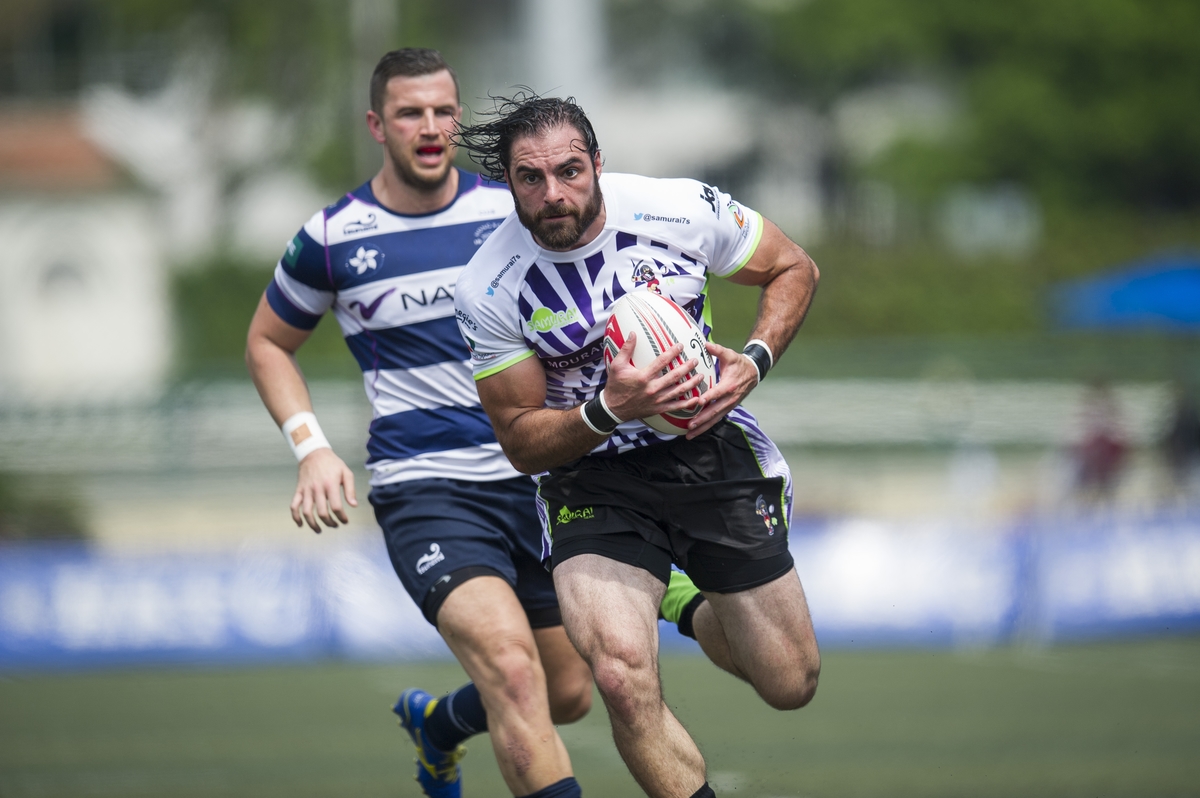 |
| Nate Ebner representing Samurai International at the Hong Kong 10s |
That doesn’t mean that cross over athletes cannot make the grade for 7s at the Olympics if they are prepared to put everything else on hold to do so. Nate Ebner, an NFL Superbowl winner with the New England Patriots in 2015, is a case in point. However his fellow NFL athlete Jarryd Haynes just missed out on the final 12 for Fiji despite making the Ben Ryan’s training squad before the tournament which shows the incredibly high standards Rugby 7s is setting for players.
So if you don’t watch the World Sevens Series (You should by the way it is an amazing, truly Global sporting event.) and you haven’t heard of these Rugby 7s players because most of them aren’t playing Rugby 15s you might be wondering where they all come from Outside of the World Sevens Series and the associated qualification process there isn’t, currently, a global club circuit below the International scene. In most Countries there aren’t national or regional circuits either**** with most professional rugby 15s clubs paying little or no attention to rugby 7s for anything other than player recruitment. The truth is, after school, the bulk of the players gain experience playing on the invitational circuit which includes famous tournaments such as the Dubai 7s, the Safari 7s, The Gold Coast 7s and The Hong Kong 10s. The teams that play on that circuit vary from established invitational teams such as Penguins or Asia Pacific Dragons to more social teams like The Titans and the Wyvern Harlequins. Players come from all over the world to make these events vibrant rugby festivals which hopefully you will have got a taste of watching the Olympics this year. Obviously some clubs do better at this than others and their fortunes wax and wane over the years as these clubs come and go.
One club in particular has a record that, as a player and coach pathway, is not only unrivaled in the world of Rugby 7s but is unrivaled in almost any sport. To put this bold and borderline arrogant claim in perspective: Of the 144 Rugby 7s Olympians in the Men’s competition one invitational rugby club, called Samurai International, has helped in some way with the identification, development or preparation of players in 8 of the 12 teams at Rio 2016. The total number of players* involved that have played for Samurai is 43 which is almost a third of those involved at the 2016 Olympics. Of the four countries without a playing representative only Japan have not had a player involved in their wider training squad prior to Rio that has also been involved with Samurai.
What is also worth noting is that coaches and staff of 7 of the 12 teams** at the Olympics in Rio have also worked with Samurai previously. In fact USA 7s Head Coach Mike Friday is the current Samurai Chairman
The impact of Samurai is not just felt at the Olympics in Rio itself but throughout the four year qualification cycle and beyond. Samurai have, as far as is known, helped either as a player pathway for or have had coaches go on to work with 5 African nations (Zimbabwe, Kenya, South Africa, Nigeria and Morocco), 10 European nations (Ireland, England, Wales, Scotland, Italy, France, Spain, Portugal, Netherlands, Germany, Israel and Lithuania), 4 nations from North America (USA, Canada, Jamaica and Guyana ) 4 nations from Australasia (Australia, Samoa, New Zealand, Fiji) and 3 nations in Asia (China, Sri Lanka and Hong Kong). Their network and eye for talent really is second to none!
Samurai don’t just have a presence in the Men’s competition, in the Women’s competition there were many previous Samurai players notably in the Australian and Team GB sides. Australia were coached by former Samurai player and Samurai coach Tim Walsh while Team GB assistant coach Richie Pugh is a former Samurai player. Chris Cracknell, a former Samurai player was coaching the Fiji ladies team. Particularly pleasing for the Samurai management team was the selection for Team GB of former Rugby League player Jo Watmore who made her Rugby 7s debut for Samurai at Amsterdam a few years back.
So a club which has helped provide a third of all the players and two thirds of all the coaches in the Men’s Olympic Rugby 7s and helped provide large numbers of players and coaches for the Women’s game. What could be better that you ask? Well, let’s look at the medalists in the Men’s competition from Fiji, Team GB and South Africa. Of the 36 players who won a medal in Rio, 17 have played and been part of the development pathway provided by Samurai. On top of that the three head coaches, Ben Ryan, Simon Amor and Neil Powell, have all coached Samurai with Amor and Powell also having played for Samurai.
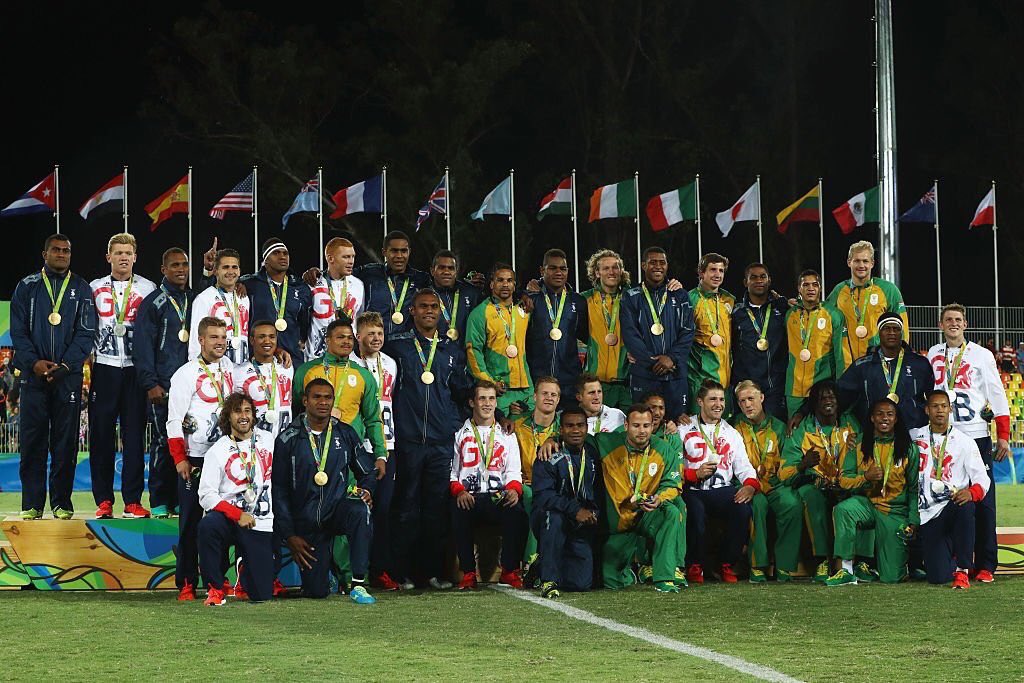 |
| 17 Samurai Alumni Out Of 36 Olympic Medalists In The Men’s Rugby 7s In Rio |
In the Women’s competition the head coach of Australia, Tim Walsh, is a former Samurai player and coach who had this to say about Samurai and it’s founder Terry Sands:
“Thank you Terry Sands, the man behind Samurai 7s, for nurturing so many World Class 7s players, coaches and now Olympians. I was one of the fortunate players and later as a coach to benefit from his elite setup. To coach and play with the best is a privilege.”
This achievement in Rio isn’t a one off either, at the last leg of the World Sevens Series in London this year there were circa 50 players and staff from 12 nations who have played or worked with Samurai. This was about average across the World Sevens Series as a whole and even surprised the Samurai management team when they sat down to work out the exact numbers. To try and capture this achievement in Samurai’s 20th anniversary year the photo below was taken at the team’s hotel at Chelsea FC the day before the tournament.
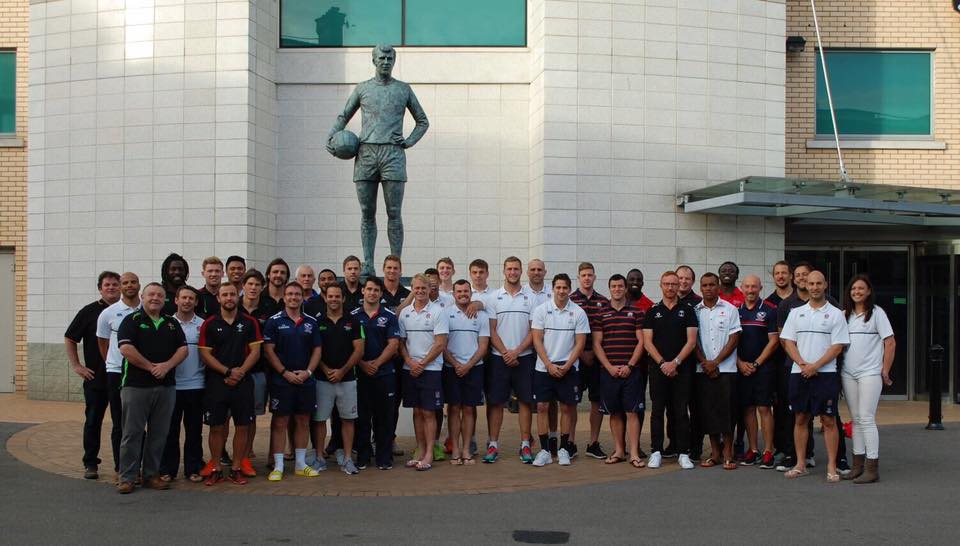 |
| Samurai Alumni At The IRB London 7s 2016 Portugal (3), Samoa (2), New Zealand (3), Scotland (2), USA (3), Kenya (2), Brasil (1), Fiji (3), Wales (3), England (12) Missing From Photo: South Africa (10), Kenya (2), Canada (1), England (1) |

 Deano's World