

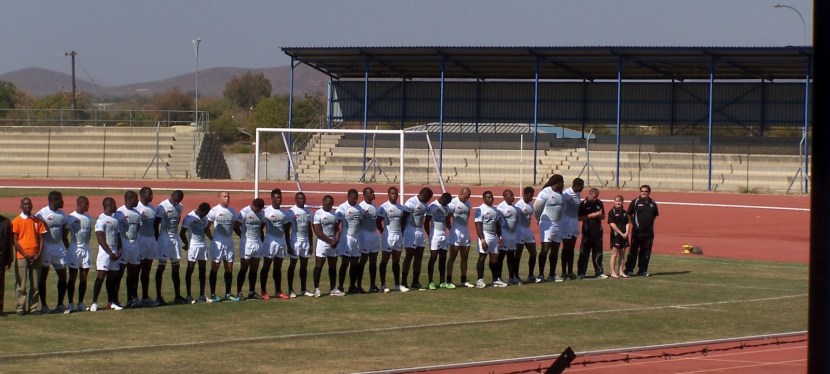
It’s been a week since I returned to the UK from the Africa Nations Cup with the Nigerian team in Botswana. I’ve had a chance to reflect on what happened and evaluate what was achieved in the two weeks as well as look forward to the next steps for Nigerian rugby.
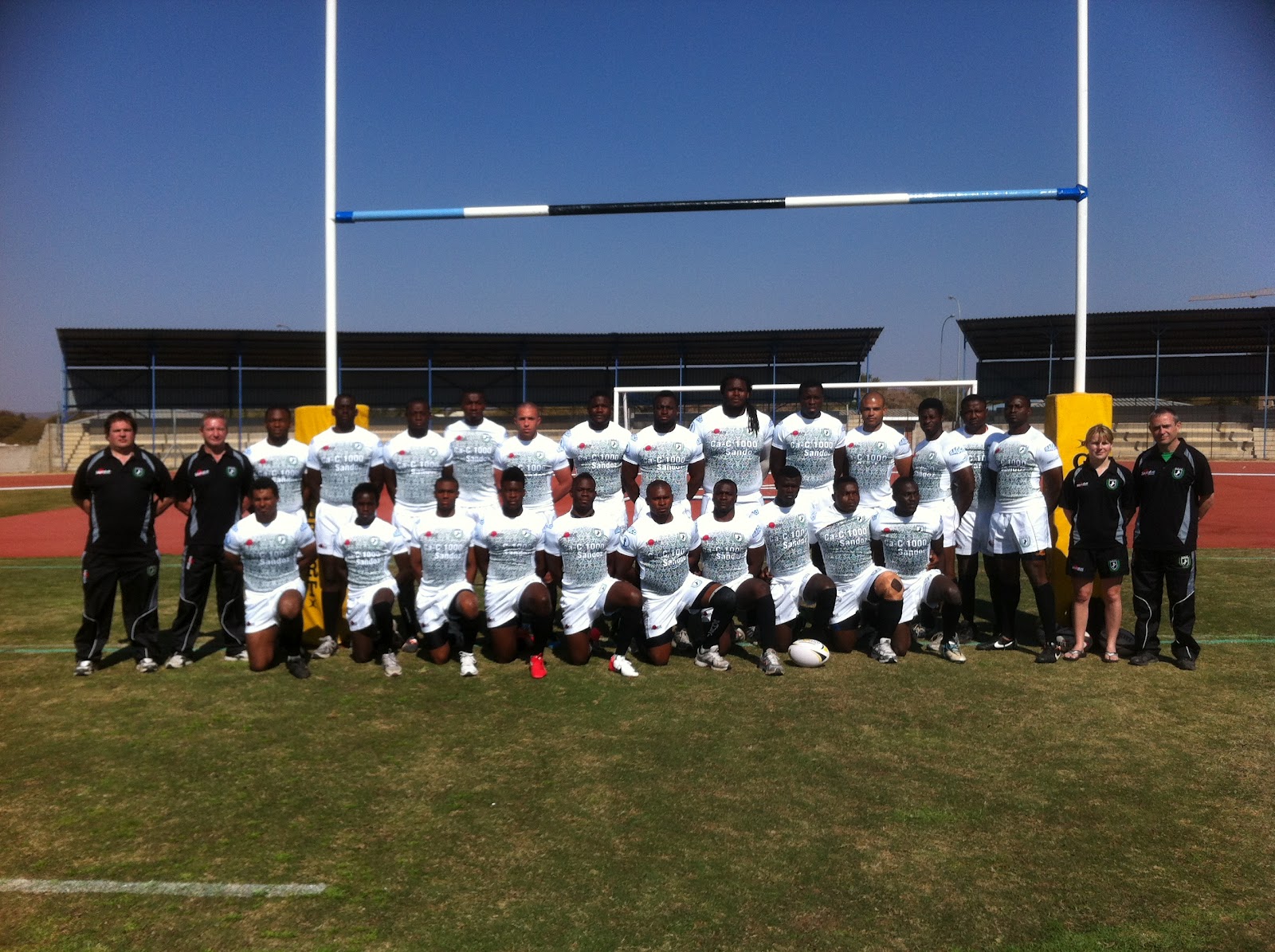 |
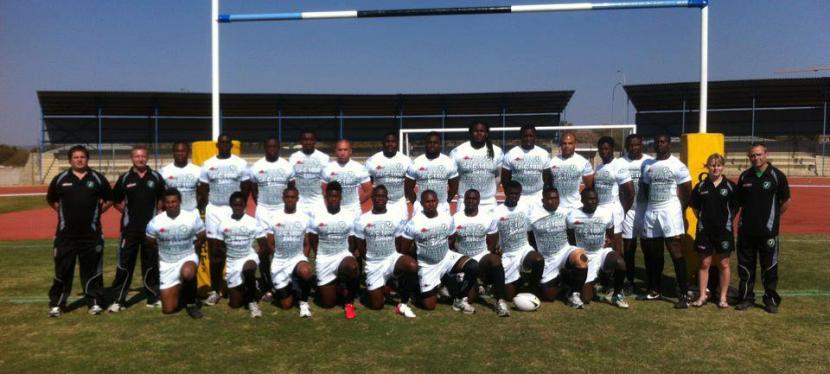
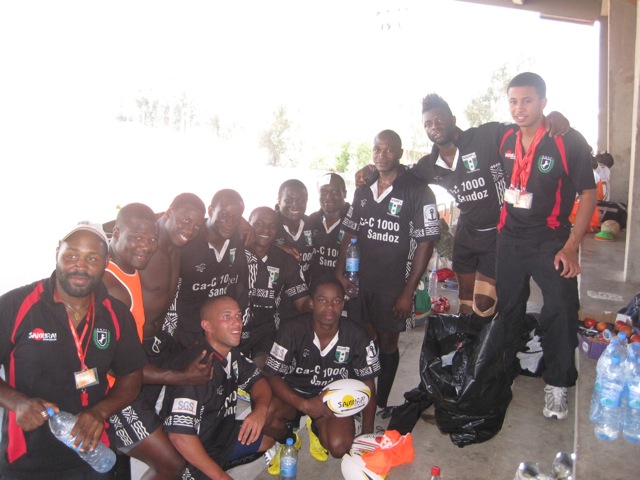
| Team Photo v Mauritius 2012 |
The Nigerian squad, 24 players selected from players based in Nigeria, South Africa and the UK (and considerably more domestic based players than countries like Italy, Argentina and Samoa), went to Botswana with no track record and sat right at the bottom of the IRB rankings to play three test matches against teams with considerably more experience than them. The last test match played by Nigeria, against Mauritius in 2011, saw Nigeria go down 45-10 to a much superior side and despite producing world class players to the benefit of other nations Nigeria had yet again struggled to make an impact. This year we faced Mauritius again as well as 1995 world cup qualifiers Ivory Coast (41st in IRB rankings) and the hosts Botswana. A difficult challenge but one the team were confident they were up for. The players had come up with a team call: “One Team One Dream” and part of that was the belief that, despite the odds being against them, Nigeria could beat any side in the tournament.
Due to a late withdrawal of Cameroon from the competition the third test match against from Botswana was cancelled as the draw was, most unfortunately, altered to enable the tournament to proceed. I felt at the time and still do now that more transparency is needed when decisions like that, changing a tournament draw, are taken but I also understand that the organisers were in a very awkward position and had to move quickly to make things work. I guess a lot of this is part of African rugby’s learning curve and lessons learnt in Botswana can and should be taken forward to future tournaments.
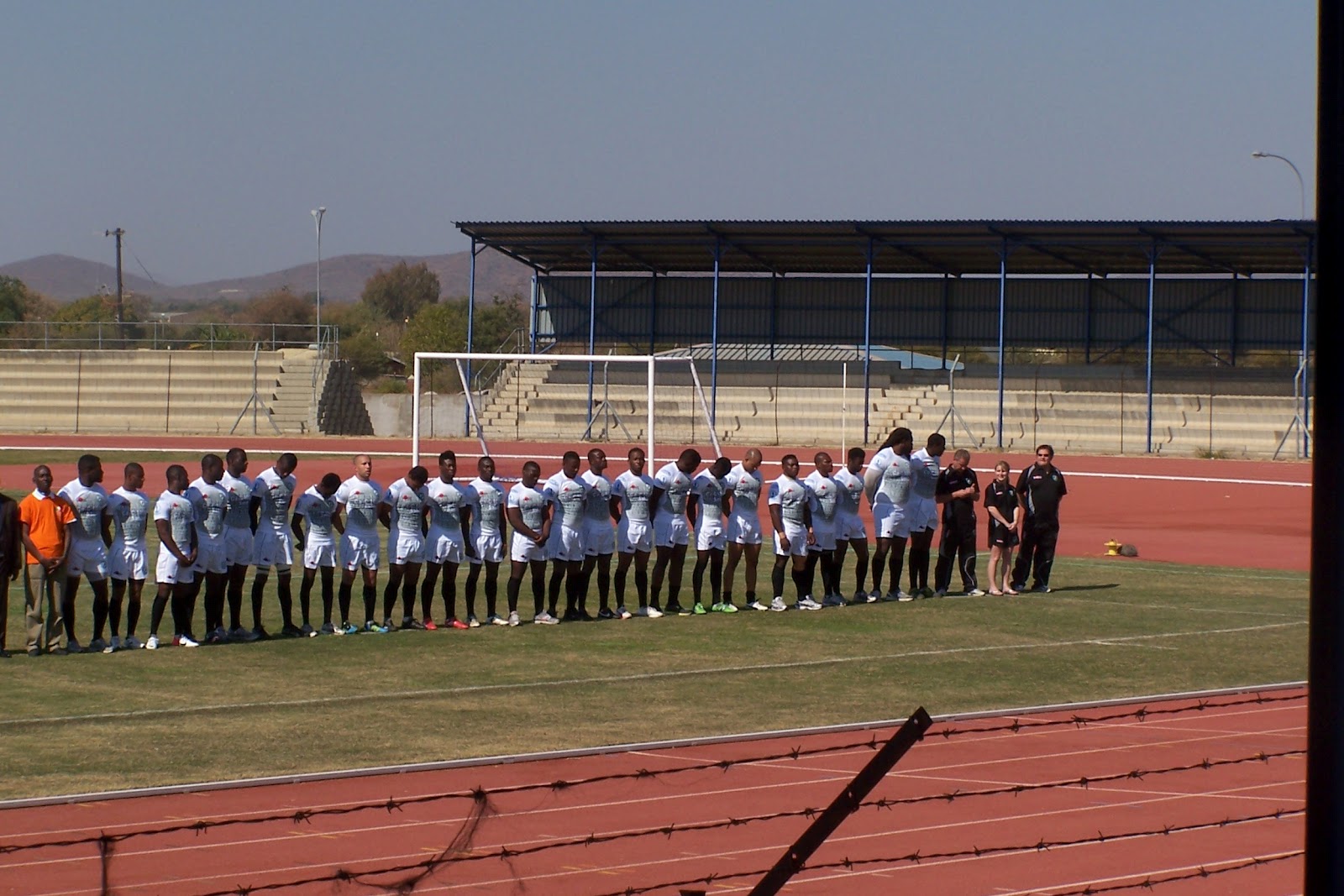 |
| National Anthem |
The first match against Mauritius saw us put early pressure on them but basic errors cost us as they scored two break away tries and raced to a 23-6 lead at halftime. We lost 26-22 but despite the scoreline we showed everyone how far Nigerian rugby had come in 12 months. We outscored them 3 tries to 2 and all of their tries came from our errors and not from their phase play. Our tries came as the result of well worked phases of play and when we got it right they had no answer to our powerful runners. At the end of the game the Mauritius players celebrated but looked more relieved than anything else. I believe we simply ran out of time to make up for our early mistakes and five more minutes would have seen us victorious. Imagine if we had been able to get in a few warm up games rather than having to use the first half to learn how to play together just three days after most of the squad met for the first time.
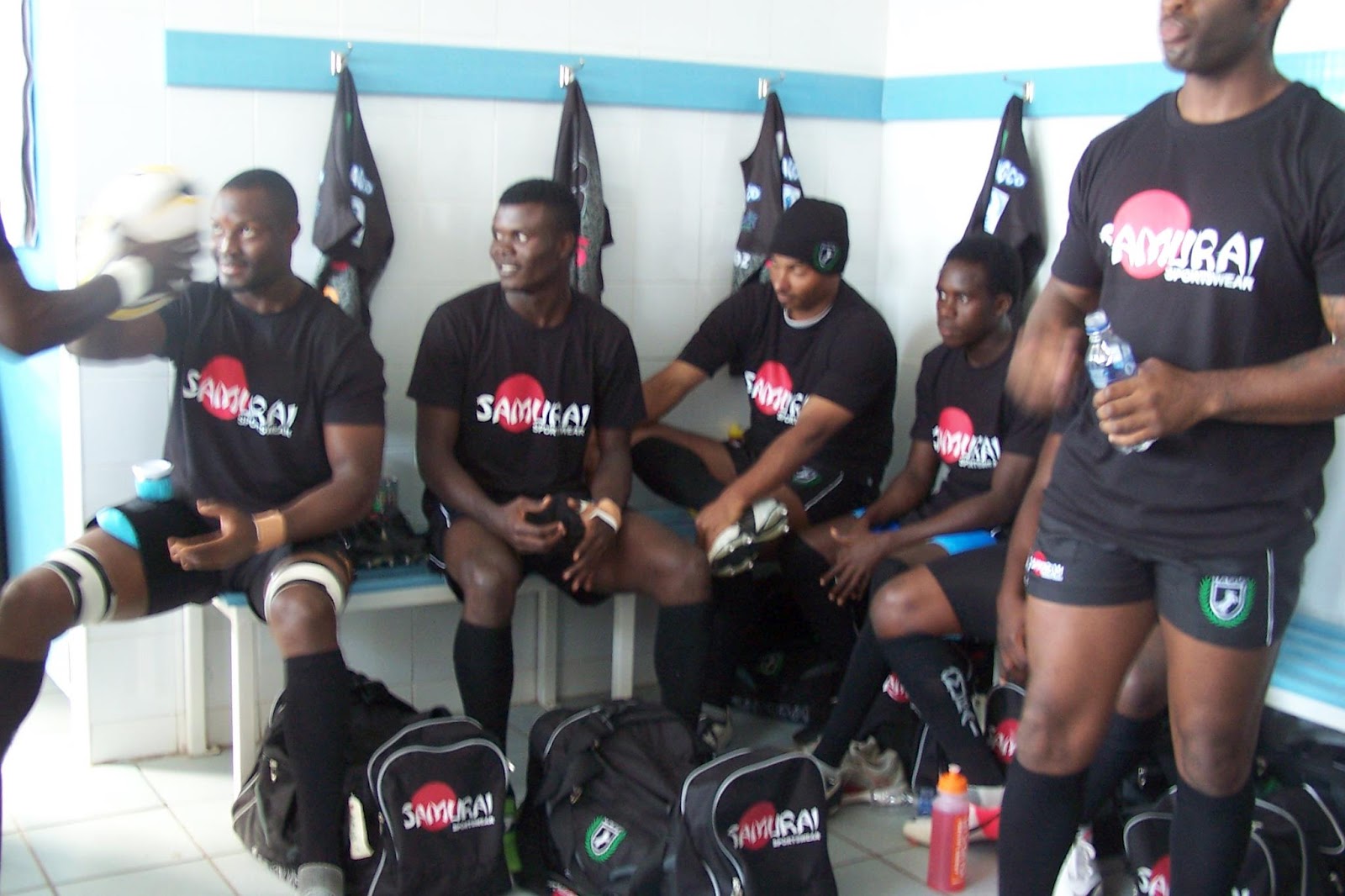 |
| Before Ivory Coast Game |
That, for me, was the kicker – We’d had virtually no preparation time together prior to the tournament and this was something that all the players commented on in their individual debriefs and the management team were painfully aware of. The only way to address this realistically is an increase in funding to enable Nigeria to develop its domestic game, identify overseas players and run regular training camps. In comparison Mauritius had a ten day training camp prior to the tournament and it showed. My honest opinion is that had Nigeria been able to do likewise then we would have won both out test matches and progressed to group 1B next year. The following information shocks everyone I’ve told: We get ZERO funding from the IRB, ZERO funding from the Nigerian government, ZERO funding from the Nigerian Olympic organisation (despite Nigeria having a very realistic chance of qualifying for Rio in 2016) and we don’t have a thriving domestic game to provide funding to a union either. Every penny we spend comes from the generous support of sponsors. Even with CAR paying for flights we have struggled. Unfortunately due to the peculiarities of CAR policy on booking flights we wasted £15,000 on flying players to Lagos from the UK to catch a flight to Botswana via SA rather than the CAR flying them direct (at the same cost to them) and leaving us £15,000 to spend on developing the game in Nigeria and preparation for the team. Personally I intend to continue to lobby for more support from the likes of the IRB. Just a small amount of help would reap dividends for Nigerian rugby. I would sincerely hope they should be able to see that its a worthwhile investment in developing the global game after what has been achieved on a shoe string.
The second test saw us lose to the Ivory Coast 29-17. They boasted players who had played in the 1995 RWC against France, Tonga and Scotland and a settled squad who had played together consistently over the last few years. Again mistakes cost us as they matched our physicality in a way that Mauritius had failed to do. However the fact their loosehead prop, their captain and a world cup veteran, was yellow carded ten minutes into the match for repeatedly failing to bind correctly in the scrum showed dramatic improvements in the Nigerian scrum which continued to put them under pressure throughout the game. Not bad results from one hour long session with the pack by our forwards coach.
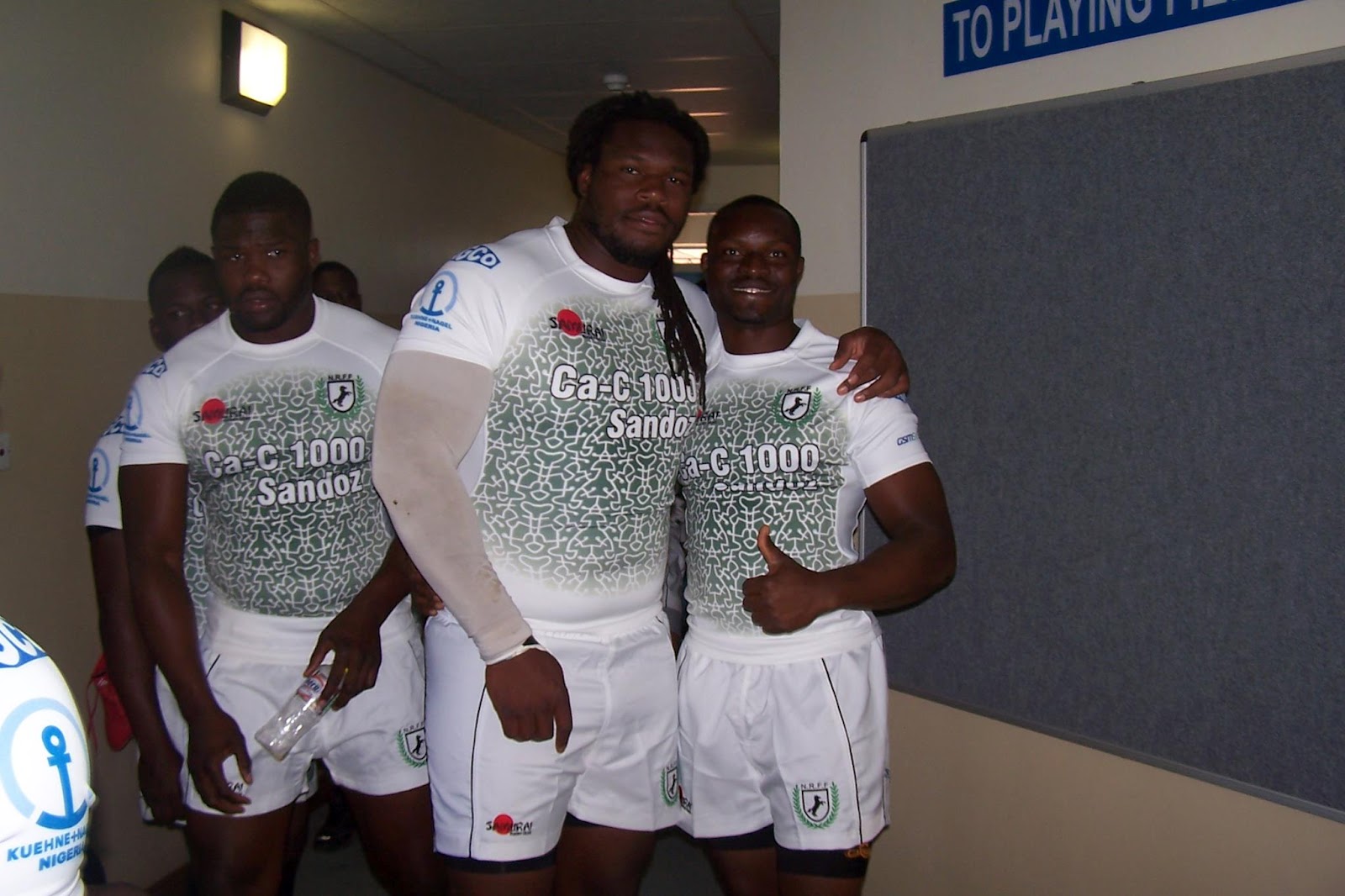 |
| Brothers |
So what can I take from this tour? I believe that we’ve more than held our own against the other teams in group 1C despite the scorelines. The improvements in performance after very little preparation demonstrate the possibilities if we can get one or maybe two training camps in each year. The players, almost all of whom were amateur, reacted well to the environment and the large step up in standard and with experience will only improve in confidence and ability. Nigeria has always produced exceptional players and with such a vast pool of potential players both domestically and abroad it just requires the infrastructure to thrive. I also realised that we had started tapping into the Nigerian community. Before the match against Ivory Coast I told the players that they weren’t alone and that we’d received 1000s of messages via social media from complete strangers at home voicing their support for their national team. Given the low profile currently of the game in Nigeria this spoke volumes of the work being done behind the scenes to improve the situation. We also had messages of support from England stars such as Topsy Ojo, Ayo Ola Erinle and Ugochukwu Monye. We also had vocal support from young Nigerians in the premiership academy sides in England one of whom tweeted how he’d rather play for Nigeria than England. Players who were injured or not released by clubs to represent Nigeria also sent in messages to the players. Rob Worrincy had just celebrated a cup win with Halifax RL but was constantly messaging us to find out how it was going. One Team One Dream. It’s not just the players in the squad but all the guys who couldn’t be there as well.
Nigerian rugby has finally arrived and the best thing about it is that is still nowhere near achieving its remarkable potential. It’s late to the party; it is still very raw but we’ve finally seen glimpses of what could be. The players believe, I and the rest of the management team have always believed but now others are starting to as well. The human potential in Nigeria itself, 160 million raw athletes, combined with fantastic players living overseas is a rugby phenomena waiting to happen. Next year, particularly if the Africa 1C tournament is hosted in Nigeria, then with the squad we have we could realistically look at going as favourites. Now there is something most people wouldn’t have thought possible if they watched Nigeria lose 45-10 to Mauritius just twelve months ago.
 |
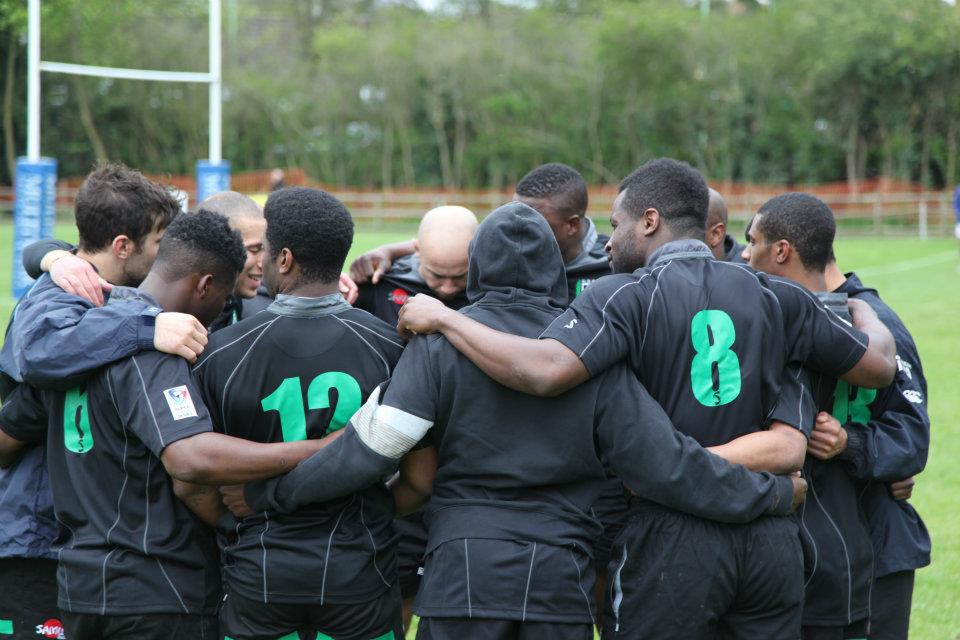
| One Team One Dream |
We always come back to “One Team One Dream”. When people asked me what it meant they assumed it referred to the 24 players winning two test matches and continuing on a path that might lead to the RWC in England in 2015. It is so much more than that. It is one team. But that team is not just the national team players it is grass roots players in Nigeria, new and old supporters, families, coaches and all those working behind the scenes to drive the game of rugby on in Nigeria. The dream was never about world cup qualification in 2015. That was never the point as it would be too short sighted. The dream is bigger than any competition or player, it’s about the emergence of a thriving rugby community in Nigeria, engaging young and old alike in a passion for the great game itself. These players, who went to Botswana with personal ambitions, also went knowing they were part of something incredible. They were there at the start of the Nigerian rugby journey and it was their responsibility to help create a legacy for Nigeria. To me that is what it really meant and that the dreams and convictions of a handful of players mean that there is now a real chance for Nigerian rugby to take the next step.
As the dust settles and the players reflect on the tournament I hope they are proud of themselves, I know I am incredibly proud of each and every one of them. It wasn’t perfect, our performances weren’t perfect and we have a huge amount of work to do BUT without what happened in Botswana we wouldn’t have the chance to take that next step. It’s a dream, but not one man’s dream. It comes from a deep rooted shared desire and belief. Many of the players told me they know that they will probably not be involved at international level again as we move forward and in a strange way they’re almost proud of that. They know that although their international career has been fleeting it means that there was a shirt there to be pulled on by the next player to represent Nigeria. It means that there is something for players and potential players in Nigeria to aspire to, to look up to and take on-board the values that Rugby imbues. It means that players, like the Watson brothers or the Itoje brothers, can opt for Nigeria knowing that they aren’t taking a huge chance with their international career. They can also be part of something remarkable, a dream that is slowly becoming a reality.





 Deano's World