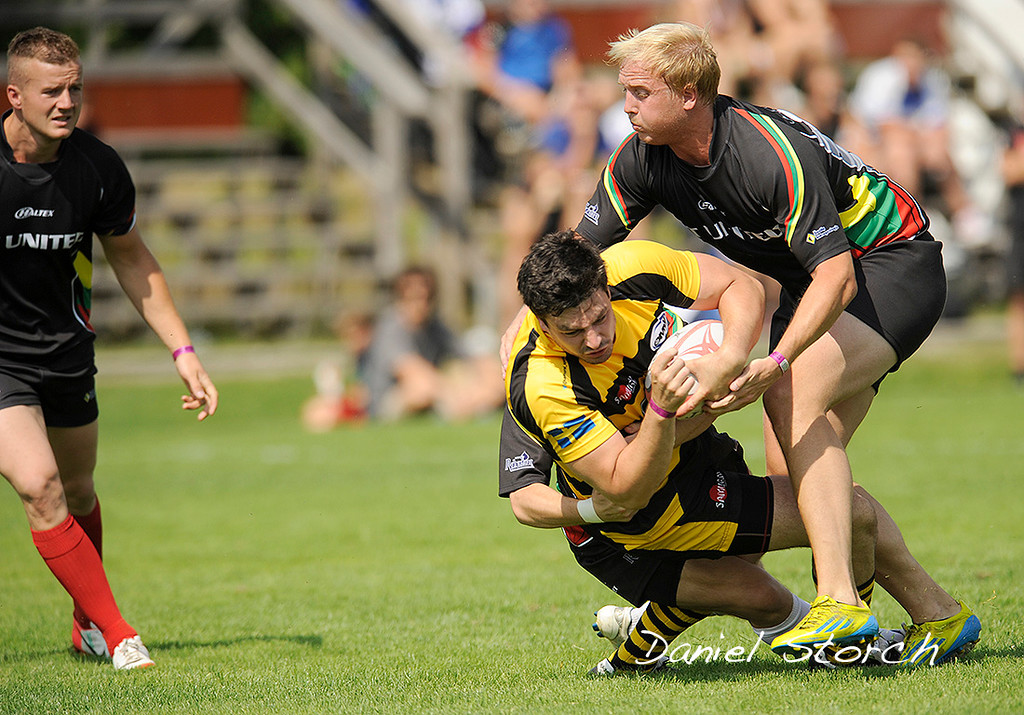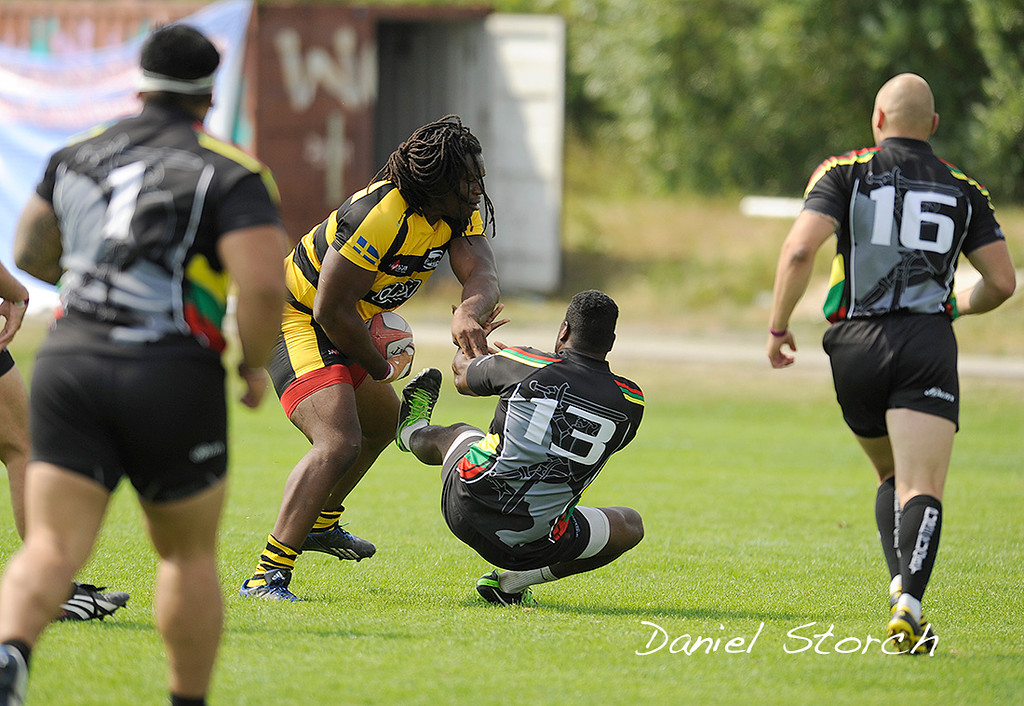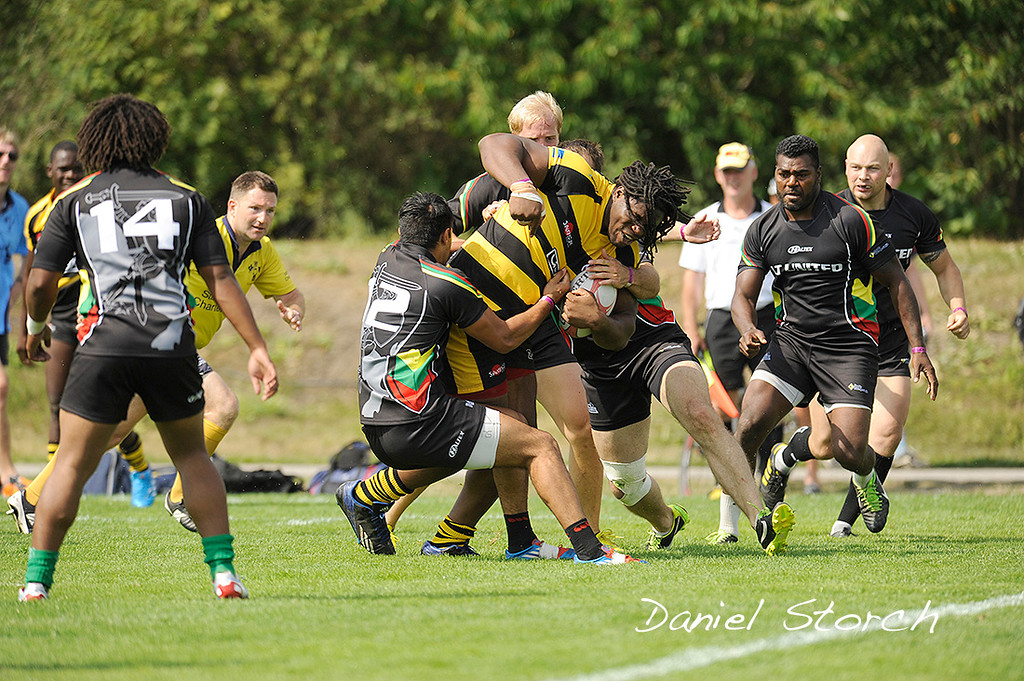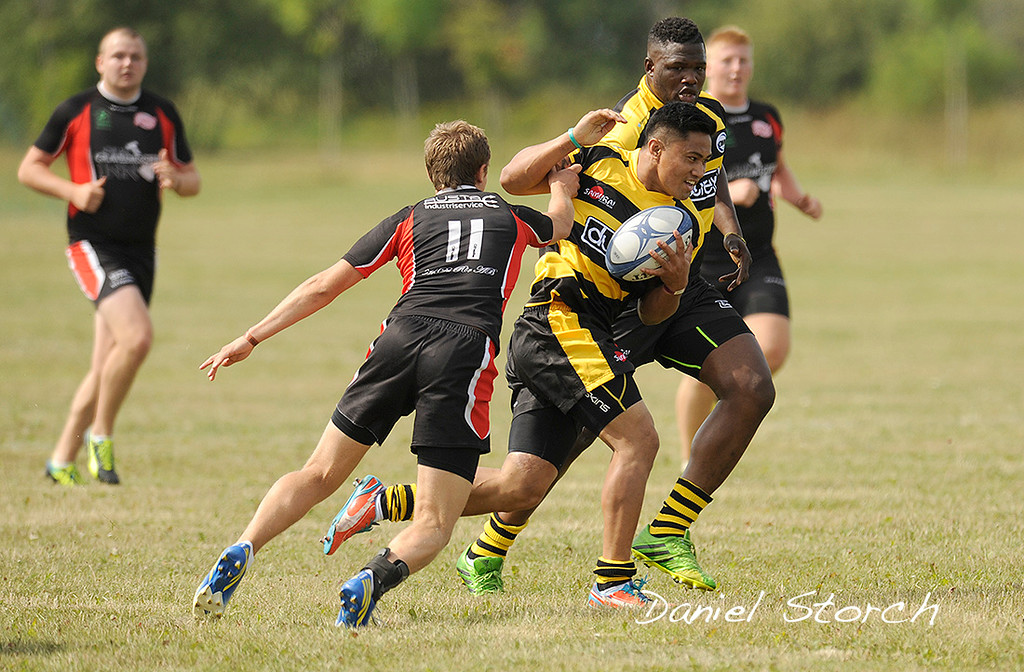
Samurai: 20 Years Of Samurai RFC

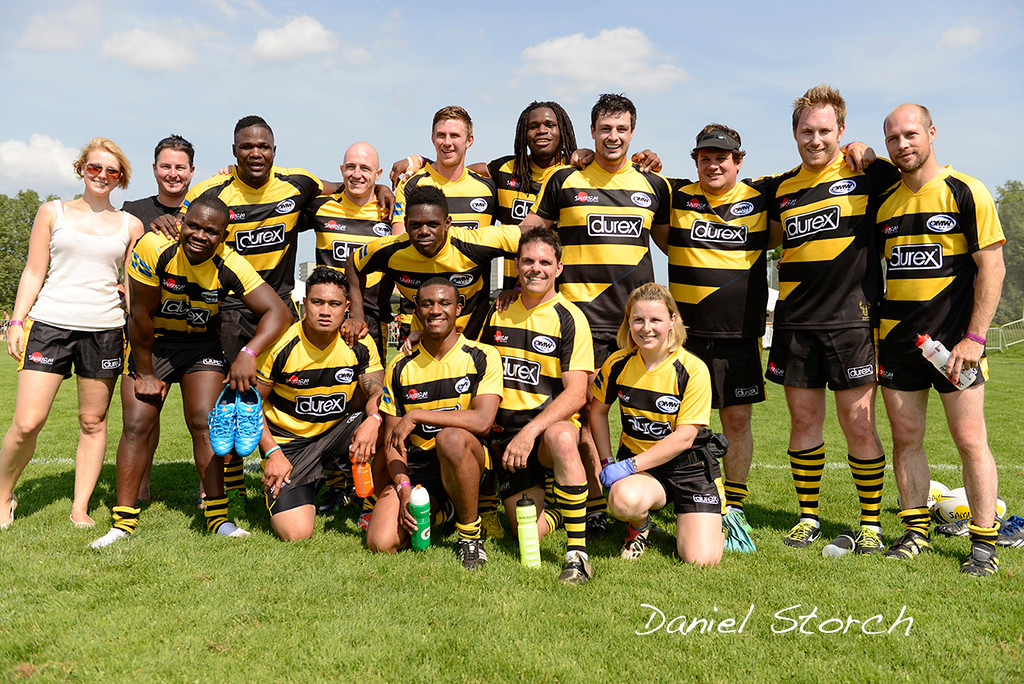
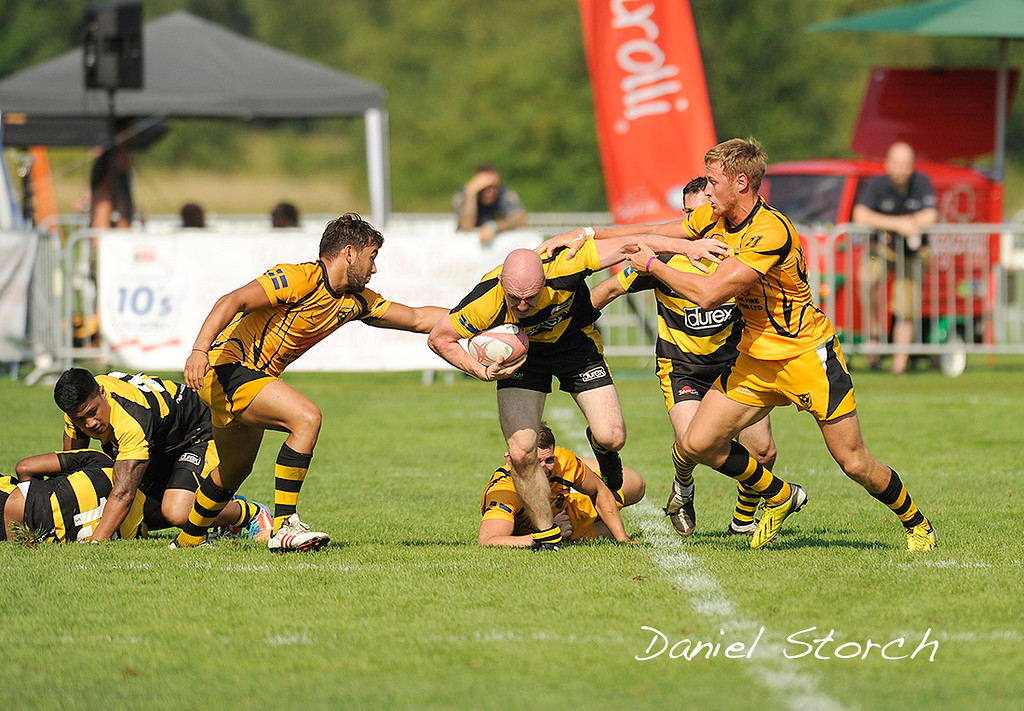
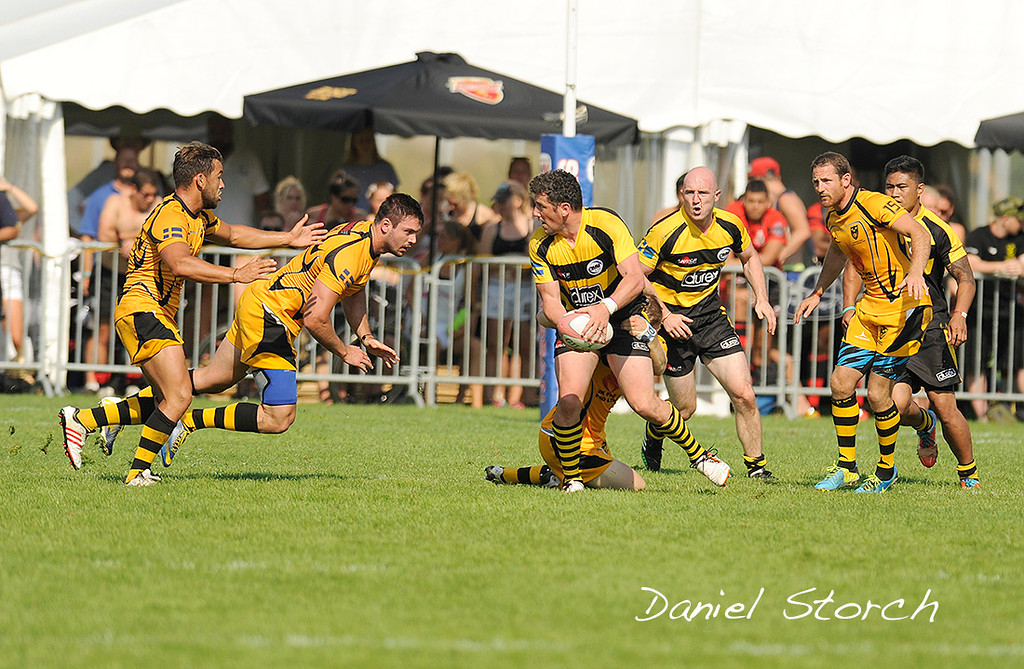
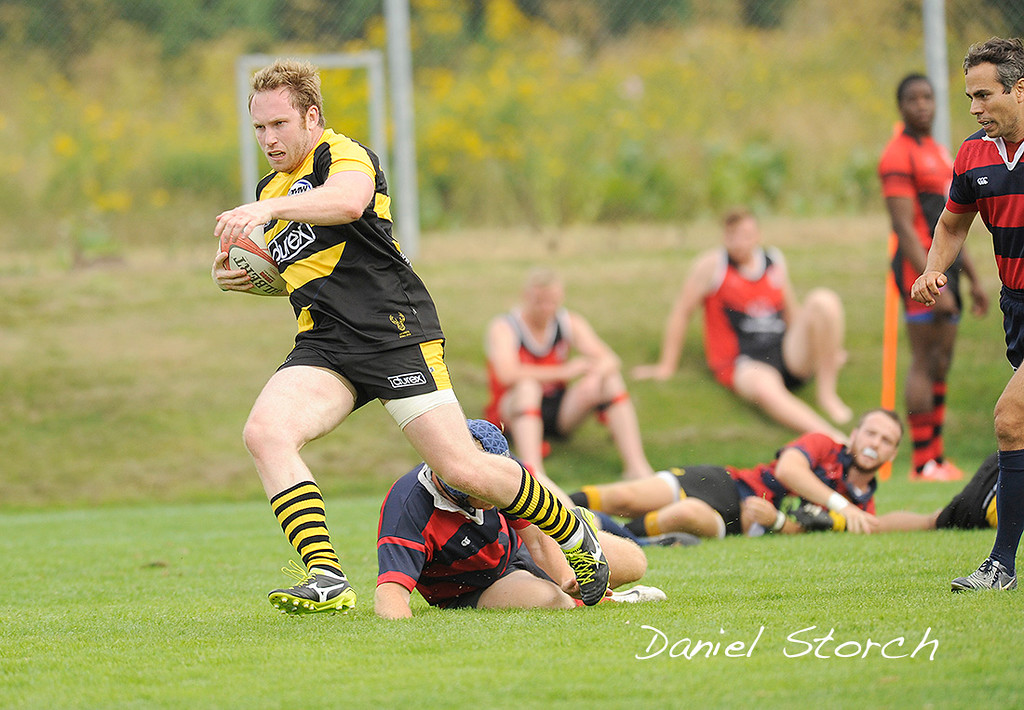
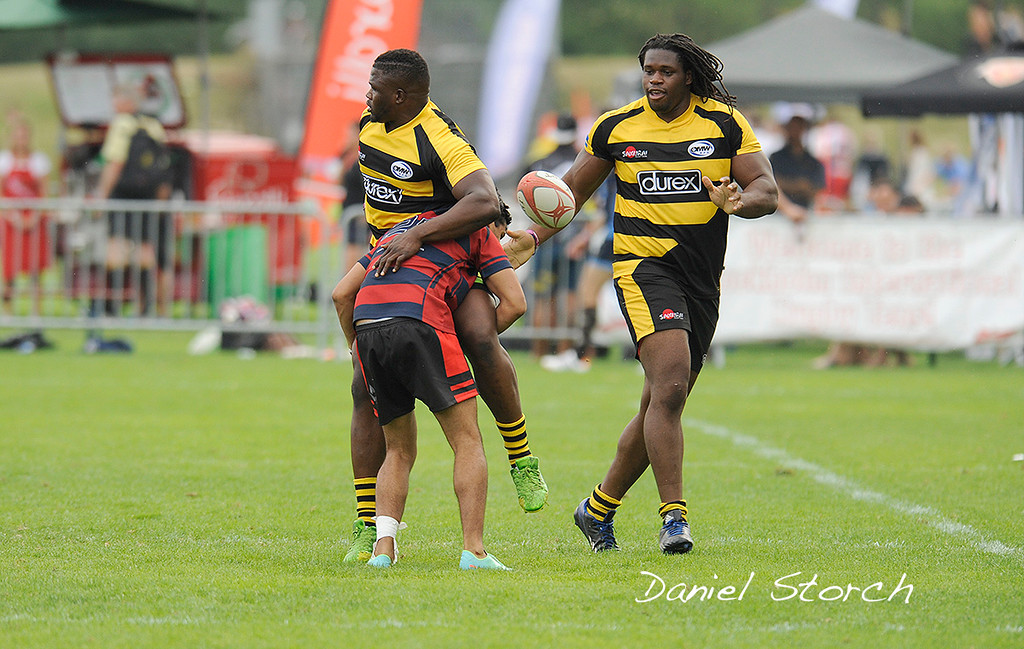
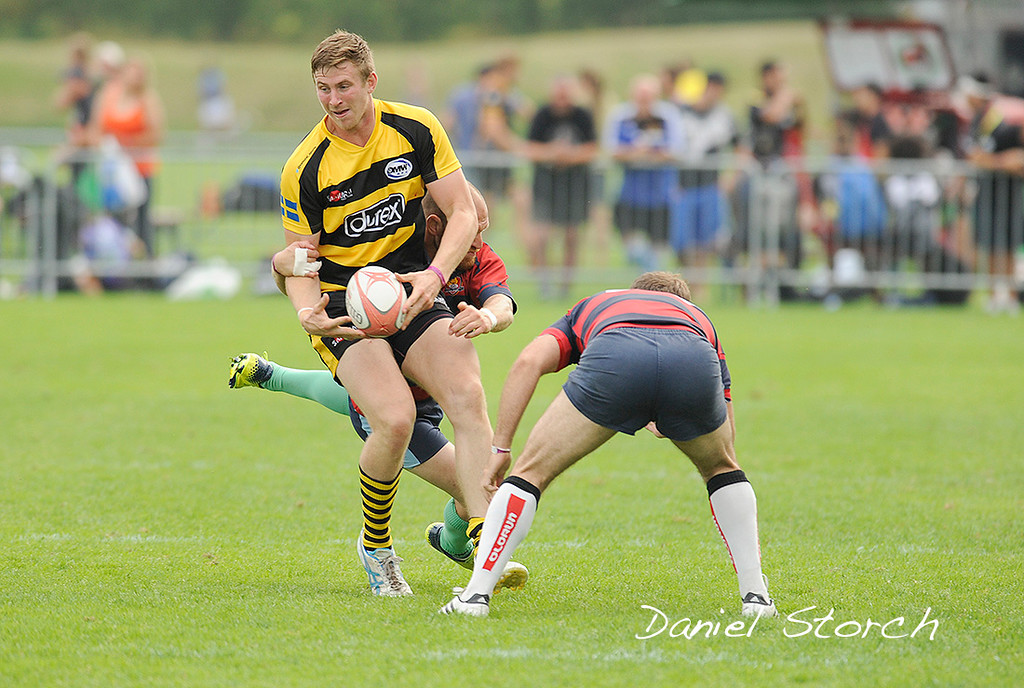
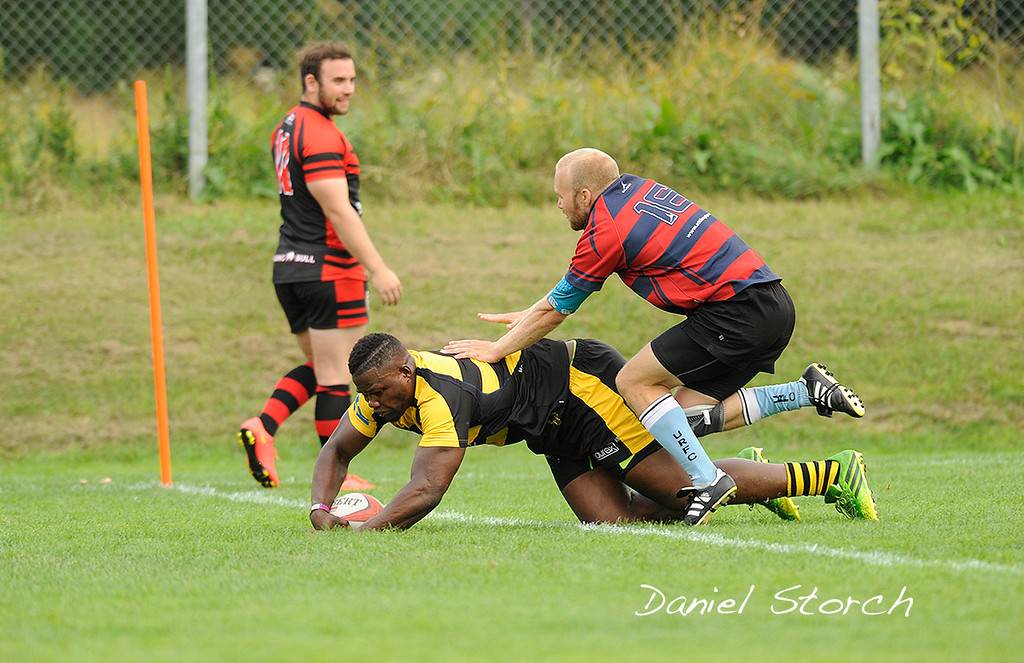
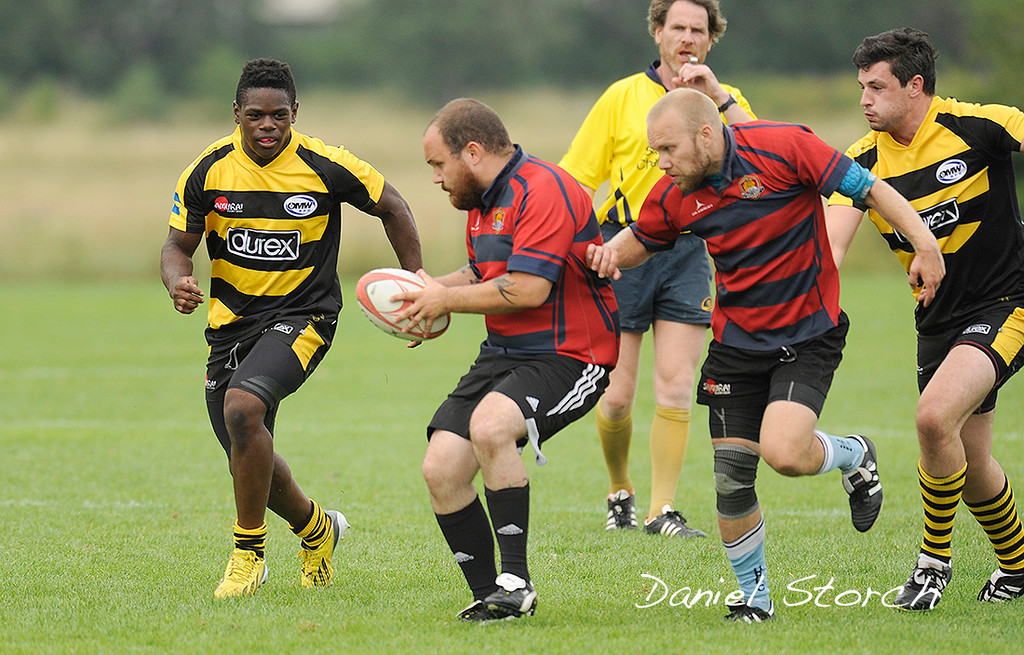
Samurai RFC celebrates it’s 20th birthday this year so we asked some of our coaches and managers from the last 20 years to pick their Samurai All Stars Team.

The rules were simple, they had to pick a squad of 12 players plus a manager, coach and physio.  They must either played alongside, worked alongside or coached everyone in their selection.  We also decided that each player must have played in at least 2 tournaments for Samurai and that this was specifically 7s and not 10s tournaments.  This instantly ruled out the likes of Taulupe Faletau, Chris Robshaw, Pio Tuwai, Maddison Hughes, Sam Cane and Nemani Nadolo among many many other rugby superstars!!

We also decided that at the end of it we would determine the overall greatest Samurai team of the last 20 Years by combining all of the selections (1 point per individual selection) and if there was a tie for any position then the Samurai RFC founder, Mr Terry Sands himself, would be given the casting vote.

So let’s get down to it……

Rob Thirlby Selection

First up is former England 7s and Samurai 7s player and current Samurai coach Rob Thirlby.  Rob still has one of the highest try scoring records on the World Sevens Series having only recently dropped out of the all time top ten.  His comparatively low number of tournaments to others on that list makes that feat even more impressive.  Rob had played and coached Samurai on a great many occasions so he had a lot of choice for his team.

  1. Russell Earnshaw (England)
  2. Simon Hunt (England)
  3. Gerry Engelbrekt (SA)
  4. Mike Friday (England)
  5. Tim Walsh (Australia)
  6. Nick Wakley (Wales)
  7. John Rudd (England)
  8. Ben Russell (England)
  9. Tony Roques (England)
  10. Andy Powell (Wales)
  11. James Bailey (England)
  12. Simon Amor (England)

Manager: Mark Dean

Coach: Mike Friday

Physio: Claire McLoughlin
Terry Sands Selection

Here we go with the main man himself.  Terry Sands founded Samurai in 1996 when he received an invitation to the Amsterdam 7s.  Terry has managed England 7s, England Saxons and Kenya 7s over the last twenty years as well as managing Samurai teams all over the World.

His selection includes six Olympians, five nationalities and some of the greatest players ever to appear on the World Sevens Series.

  1. Werner Kok (South Africa & IRB Player Of The year)
  2. Sam Dickson (New Zealand)
  3. Scott Curry (New Zealand)
  4. Jack Wilson (England & New Zealand)
  5. Kwagga Smith (South Africa)
  6. Ollie Lindsay-Hague (England)
  7. Oriol Ripol (Spain)
  8. Ben Gollings (England)
  9. Ryno Benjamin (South Africa)
  10. Zar Lawrence (New Zealand)
  11. Carlin Isles (USA)
  12. David Strettle (England)

Coach – Colin Hillman (Wales)

Manager – Mark Dean (Nigeria)

Physio’s – Remi Mobed (England) & Claire McLoughlin (IRB)
Tim Walsh Selection

Our next selection is from an Olympic Gold Medal winning coach, former Australia 7s player, former Samurai 7s player and Samurai Coach Tim Walsh.

Tim has already made a few selections himself so let’s find out who made the grade for one of the most highly thought of coaches in the World of Rugby 7s

  1. Andy Vilk (England & Italy Coach)
  2. Russell Earnshaw (England)
  3. Humphrey Kayange (Kenya)
  4. Mark Bright (England)
  5. Jim Jenner (England)
  6. Kevin Barrett (England)
  7. Ross Blake (England)
  8. Tim Walsh (Australia)
  9. Sherwin Stowers (New Zealand)
  10. John Rudd (England)
  11. Simon Hunt (England)
  12. David Strettle (England)

Coach: Colin Hillman

Manager: Terry Sands

Physio: Claire McLoughlin

Mark Dean Selection

Mark “Deano” Dean is the former Nigeria 7s and 15s manager and has been with Samurai for ten years having taken the very first Barracudas team to Amsterdam in 2007.  Deano has managed Samurai all over the World and worked with many of the best players and coaches to have ever been involved with Samurai.

His selection includes players from ten different nations, seven Olympians and quite a few players from the side that won the Safari 7s in 2015.

  1. Sam Dickson (NZ)
  2. Oscar Ouma (Kenya)
  3. Mark Bright (England)
  4. Pedro Leal (Portugal)
  5. Rhys Jones (Wales)
  6. Osea Kolinisau (Fiji)
  7. Chad Shepherd (Germany)
  8. Simon Hunt (England)
  9. Carlin Isles (USA)
  10. Oliviero Fabiano (Italy)
  11. Ignacio Martins (Spain)
  12. Dan Bibby (England)

Coach: Nick Wakley (Wales)

Manager: John Elliot (England)

Physio: Emma Mark (Nigeria)

Nick Wakley Selection

Nick Wakley has played and coached Samurai for over ten years. A Welsh 7s International player and now the Wales Ladies 7s coach he has won tournaments for Samurai with some of the best players all over the world.

His selection reflects that with players from six nations including the current top try scorer and the all time top point scorer on the World Sevens Series as well as several Olympic medal winners.

  1. Humphrey Kayange (Kenya)
  2. Marius Shoeman (SA)
  3. John Rudd (England)
  4. Sam Cross (Wales)
  5. Mark Bright (England)
  6. Simon Hunt *(England)
  7. Ben Gollings (England)
  8. Simon Amor (England)
  9. Tim Walsh (Australia)
  10. Zar Lawrence (New Zealand)
  11. Collins Injera (Kenya)
  12. Henry Speight (Australia)

Manager: Terry Sands
Coach: Colin Hillman
Physio: Claire McLoughlin

Mark Hewitt Selection

Mark Hewitt has a distinguished CV as a coach with Cornish Pirates, Gloucester and now Worcester Warriors.  He has coached Samurai to notable victories in Amsterdam and Bournemouth and worked with huge numbers of players who have gone on to have very successful Premiership careers.
His selection contains players from throughout his career including RWC7s winner Rhodri McAtee and former International players and current International coaches Chad Sheppard, Simon Amor, Chris Cracknell and Tim Walsh.

  1. Mark Bright (England)
  2. Jacob Abbot (England)
  3. Richard De Carpentier (England)
  4. Simon Amor (England)
  5. Tim Walsh (Australia)
  6. Oriol Ripol (Spain)
  7. Christian Wade (England)
  8. Rob Vickerman (England)
  9. Chris Cracknell (England)
  10. Charlie Walker Blair (Not Capped)
  11. Chad Sheppard (Germany)
  12. Rhodri McAtee (Wales)

Manager: Matt Davies (Wasps Academy Director)

Coach: Mark Hewitt (Worcester Warriors)

Physio: Remi Mobed (England 7s & England FA)

Russell Earnshaw Selection


Russell “Rusty” Earnshaw is the former England 7s assistant coach, England 7s International, Bath player and coach of the GB Students team.  Rusty has coached and played for Samurai all over the world and as one of the longest serving members of the club it is no surprise he has made it into several team selections himself!

His selection includes Mike Boys one of the original Samurai, Simon Hunt the Samurai player of the decade (96-06) and England 15s star David Strettle along with some of the most famous names in the World of Rugby Sevens.

  1. Simon Hunt (England)
  2. Owen Scrimgeour (New Zealand)
  3. Rob Vickerman (England)
  4. Mike Friday (England)
  5. Mike Boys (Wales)
  6. Tim Walsh (Australia)
  7. David Strettle (England)
  8. Gerry Engelbrecht (South Africa)
  9. Chris Cracknell (England)
  10. Shaun Welch (Uncapped)
  11. Richard Carter (Wales)
  12. Ben Lewitt (Uncapped)

Manager: Matt Davies (Wasps Academy Director)

Coach: Colin Hillman (Wales)

Physio: Lorcan McGee (Aston Villa & GB Students)


Mike Friday Selection

Mike Friday, the current Samurai Chairman, has played for England 7s and coached England in back to back Hong Kong titles.  He has also coached Kenya to their highest ever placing on the World Sevens Series and is the current head coach of USA 7s.  Mike also coached Samurai to back to back victories in the Middlesex 7s and to their recent Amsterdam and Safari 7s triumphs.  His selection includes players from five different countries and includes the WSS all time top try scorer and several winners of the WSS player of the year award.

  1. Oscar Ouma (Kenya)
  2. Frankie Horne (SA)
  3. Phil Dowson (England)
  4. Oriol Ripol (Spain)
  5. Mike Boys (Wales)
  6. Mark Appleson (England)
  7. David Strettle (England)
  8. Humphrey Kayange (Kenya)
  9. Simon Amor (England)
  10. Kingsley Jones (Wales)
  11. Henry Paul (England)
  12. Collins Injera (Kenya)

Manager: Terry Sands

Coach: Colin Hillman

Physio: Mike Snelling

Tony Roques Selection

Tony “Rocky” Roques is an England 7s stalwart.  He played for England under Joe Lydon, Mike Friday and Ben Ryan before taking on the assistant coaching role under his former team mate Simon Amor.  Rocky has played for Samurai on numerous occasions as well including winning tournaments in Amsterdam and Basingstoke.

His selection is the only one made up entirely  of players from one nation and also includes six players who went on to coach Samurai themselves.  He also gave our favourite reason for selecting a player (a certain Mike Friday) which was “Because he never shuts up”.

  1. Phil Dowson (England)
  2. Rob Vickerman (England)
  3. Pat Sanderson (England)
  4. Simon Amor (England)
  5. Ben Gollings (England)
  6. Ben Foden (England)
  7. Dan Norton (England)
  8. Russell Earnshaw (England)
  9. Phil Greening (England)
  10. Mike Friday (England)
  11. Rob Thirlby (England)
  12. Richard Haughton (England)

Manager: Terry Sands
Coach: Simon Amor
Physio: Remi Mobed

The Samurai 1996-2016 All-Stars Selection


So, here it is, the Samurai All Stars of 1996-2016.  Six different nations from four different continents represented in the twelve man squad, players that went on to be Olympic medal winning coaches, players that went onto successful International 15-a-side careers, topped off with some SERIOUS wheels and a RWC7s winning coach at the helm.

Not bad at all.

  1.  Mark Bright (England)
  2.  Russell Earnshaw (England)
  3.  Humphrey Kayange (Kenya)
  4.  Simon Amor (England)
  5.  Tim Walsh (Australia)
  6.  Oriol Ripol (Spain)
  7.  David Strettle (England)
  8.  Zar Lawrence (New Zealand)
  9.  Jon Rudd (England)
  10.  Carlin isles (USA)
  11.  Sam Dickson (New Zealand)
  12.  Simon Hunt (England)

On Standby:  Christian Wade, Oscar Ouma, Collins Injera, Ben Gollings

Manager: Terry Sands (England)

Coach: Colin Hillman (Wales)

Physio: Claire McLoughlin (England)

Not a bad team by any standard and one that would certainly be competitive at the highest level.  For a club that is only twenty years old to have had such a talent pool to draw on is testament to the attraction of pulling on the Samurai 7s jersey.  It makes you wonder who will be pulling on the shirt in the next twenty years!

Samurai: Protecting The Herd

This is a tale about Elephants, Samurai, Rugby 7s and a Welshman, which is in all honesty not an opening line I ever expected to write.  I am going to assume for the purpose of brevity that you are capable of telling each of them apart.  If not I suggest you take a crash course in geography and zoology, watch the match between Japan and New Zealand in the 1995 RWC, take a trip to Melrose in Scotland and buy some industrial strength lubricant.

Safari 7s Winners 2015

This story begins in Kenya with Samurai 7s having just won the Safari 7s in Nairobi for the second year in a row.  They had beaten a young England team in the quarters, Western Province in the semi and finally a very talented Kenya team 20-19 in the final. We’d celebrated in style following the obligatory court session and put away more than a few beers.  Players from 7 nations who had come together in less than a week to play and win at 6000′ above sea level in what is undoubtedly one of the toughest tournaments in the world, that isn’t on the World Sevens Series, enjoying the spoils of victory & back to back wins at the Safari 7s.

Elephants, Edwin, Samurai & Angela Sheldrick 2015

The next day, before we flew home, I had arranged for the squad to visit the David Sheldrick Wildlife Trust (DSWT) and their orphanage on the outskirts of Nairobi in the Nairobi National Park.  A good friend of mine who has, in my opinion, the best job in the world as a safari guide had put us in touch with Lina Sideras.  Lina is one of the amazing people running the orphanage and was delighted to have us join the public visit that day.  What we didn’t expect was when Angela Sheldrick herself came out to say hello and then talk rugby with us!  As it turns out her sons Roan and Taru are rugby mad and she wanted to hear all about the tournament and the win over Kenya.  She must have taken a shine to us  for some, still unfathomable, reason because we were invited on a private tour to meet the orphans and other residents up close and personal.  Maxwell the Black Rhino who was born blind and taken in by the Sheldrick family was a big favourite as was Kiko the young Giraffe who got on famously with players Glen Rolls & Pierre Peres.
We then got a real treat, Edwin the senior keeper, allowed us to walk in with the herd of Elephants at the orphanage.  It was an unbelievable privilege to walk with such beautiful and intelligent animals and something none of us will ever forget!  I even got to meet Kauro an elephant that my wife and I had adopted personally some time before whilst on honeymoon.  I learnt that Elephants recognise you by scent and that by blowing gently on the end of their trunk is how they identify individuals.
Angela, Lina and Edwin told us how each of the orphans came to be in their care and of the perilous lives that these incredible animals are forced to live due to the superstitions and greed of the most barbaric and vicious species on the planet: homo sapiens.  The statistics were shocking then and have got even worse after the Elephant Census carried out Africa wide this year showing a 30% drop in the Savannah Elephent population in under ten years.  My youngest brother, the ecologist, expanded on the scope of this pending disaster when I returned home by explaining the role Elephants play in the ecosystem as Keystones Species.  Their impending demise will be bad for everyone and everything and unless the main culprits, man, change their behaviour quickly then the situation looks grim.

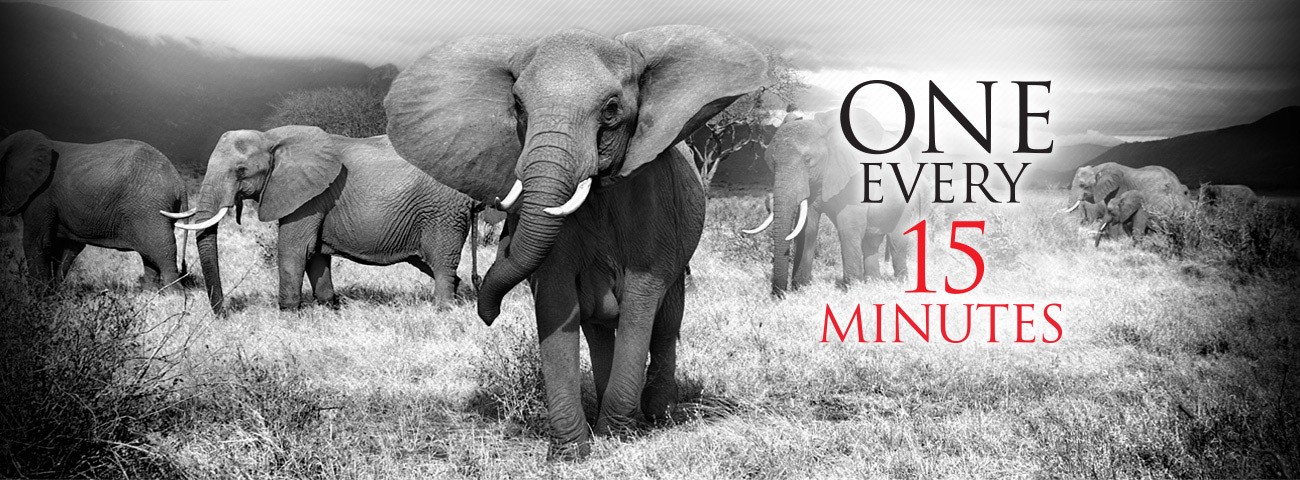
iWorry – An Elephant Is Killed In Africa Every 15 Minutes By Poachers

We sat there on the coach back to the hotel and you could almost hear the players thinking about what they had just seen and just been told.  As bloody usual it was a Welshman called Luke Crocker who, in his own inimitable style, started the ball rolling.  “We could make a difference here, not a big difference but a real difference”  Not the most elegant of statements but we understood what he meant.   As he spoke I sat there thinking about how I had won the Amsterdam 7s, the GB 7s Series and the Safari 7s with Luke that year.  He had skippered us in Nairobi and played despite being laid low with a stomach bug, “Shitting through the eye of a needle” as he put it, he had led the team from the front to that hard fought victory over the Kenyan team in the final.  He had simply been immense all year, all those victories and dedication to the Samurai cause, but in that moment I had never been more proud of him.  Don’t get me wrong, for me rugby and winning at rugby are important.  Very important in fact as my wife will tell you at great length with a long suffering look of exasperation on her face.  However it turned out, much to my surprise, that there are a few things in life that are significantly more important.

Samurai In With The Herd 2016

I should probably warn you that I actually don’t know a great deal.  To be fair this probably doesn’t surprise anyone who knows me particularly well as I was once told by one of my lecturers my attitude to learning in his class was “somewhat casual”.   A brief summary of what I do know includes “Trilobites look a lot like Woodlice” (Zoology & Palaentology 101, a great course you should do it), Gin & Tonic is definitely medicinal, that you should never eat anything bigger than your own head and you shouldn’t sleep with anyone you cannot bench press.  I also know that if you are given the opportunity to do something that can make a positive difference then, like with a rugby ball, you should take it in both hands and run with it.

There are endless quotes and sound bites on the subject of “making a difference” but two of them from very different sources have always resonated with me.  As we headed back to the hotel, with the players discussing Elephants around me, I played them over and over again in my head wondering how we could make a difference in something that was a global problem.  The first has been used by many different people over the years but the version I had heard was from world renowned conservationist Jane Goodall:

“The least I can do is speak out for those who cannot speak for themselves”

The second was from my childhood, one of Aesop’s Fables told to me by my parents, probably after I had committed yet another heinous act of childish villainy and in the vain hope of keeping me from continuing to turn into the sort of nightmare child every parent must dread.

“No act of kindness, no matter how small, is ever wasted.” 

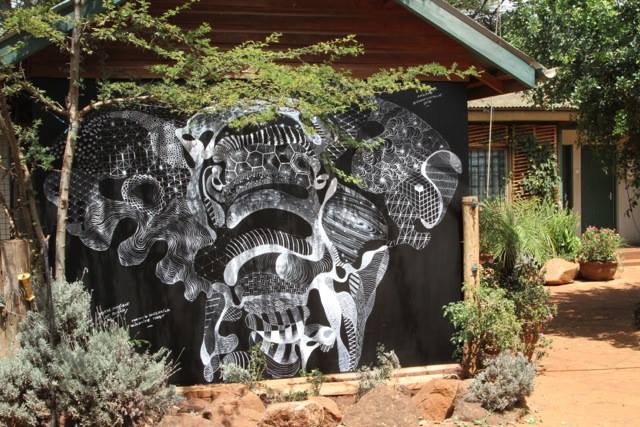
Elephant Mural At DSWT

The one from Aesop gave us a little perspective.  We weren’t hugely wealthy, we weren’t influential enough to change the minds of all the terrible people driving the market in animal parts and we weren’t scientists who could come up with an ingenious solution to the huge problems of human animal conflict but we could still help where we could.   It meant we could contribute enough to make a difference to individual orphans and the team that looked after them. That, to us, seemed like a cause worth taking on and one with which we could make a real difference.  So, before we left Kenya, we contacted the David Sheldrick Wildlife Trust and adopted an orphan called Simotua who had suffered terribly at the hands of poachers and was recovering from a spear wound to the head and a snare wound to his leg.  We also spoke about how we could, and the Kenyan players like Sammy Oliech in particular, could help raise awareness of the situation and of the work being done by the likes of the DSWT.  Crocker also suggested that we take on some elements of the DSWT in our playing kit next year, specifically the elephant mural painted at the orphanage, and call it the “Tembo Shirt”.

The main man at Samurai, Terry Sands, also got involved and after he had visited the orphanage later that year Samurai International RFC adopting another young orphan called Ambo following the tragic news that little Simotua had, despite a brave fight, succumbed to his injuries.  He also agreed to design a shirt based on the DSWT mural for the Samurai 7s team to wear at the tournament in 2016.  Samurai Sportswear would also produce a replica shirt from which the proceeds would go to the DSWT.  The shirts would be accompanied by a social media campaign supported by the whole Samurai Family including the likes of Mike Friday the former Kenya 7s coach.  The shirts went down a storm with the Samurai 7s players constantly being asked for their shirts while on tour.  We hope that the sale of replicas generates a decent amount of money for the DSWT so, plug time, if you fancy buying one click here.

And yes, my nieces and nephews can all expect one for Christmas.

The Tembo Shirt

So fast forward to the Safaricom 7s in 2016, three of the players from 2015 had made the selection for this year’s Samurai team.  Sadly Luke Crocker could not get released by Cardiff to play but Scotland International Michael Fedo and Spanish Olympians Paco Hernandez and Ignacio Martins travelled once again to Kenya to compete at the Safari 7s.


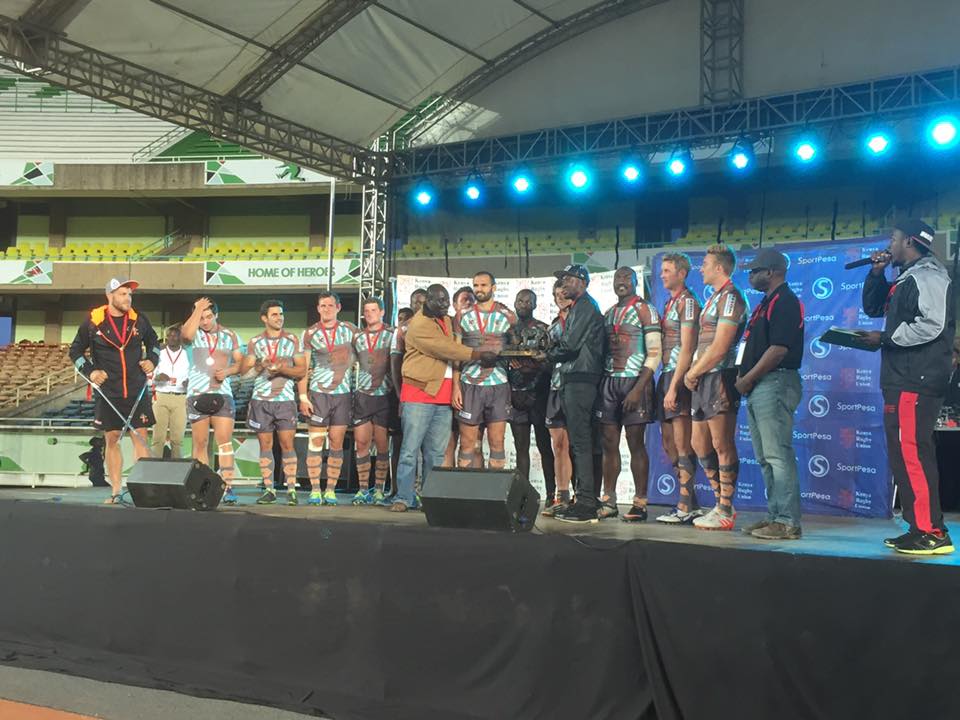
Samurai RFC – Runners Up At Safari 7s 2016

Our aim was, as usual, to make the cup final of the competition and be in with a chance of winning it.  We also discussed at our first team meeting our aims with regards to raising awareness for the DSWT and talked about the impact we hoped we could have in raising awareness for their work.  We knew that for every game we won at the tournament the chances increased that more people would start talking about the David Sheldrick Wildlife Trust.  This meant they were more likely to make a donation to the DSWT that could fund milk for an orphan elephant to keep them alive, it might fund equipment for the amazing rangers, keepers and anti poaching teams that are working day in day out to prevent the extinction of one of the most important species on the planet and it would fund the reintegration of the orphans back into wild breeding herds which was vital for long term species survival.

Samurai & Kenya 2016

So what has been achieved?  Sadly we haven’t magically solved the problems facing the African Savannah Elephant but we did get the chance to raise awareness of the problems they face.  We gave exposure to the DSWT on national television (Zuku Sports) and in the Kenyan press and we answered questions from local school children about our kit and the Trust.  It is vital to continue the process of educating the children and people of Kenya because how we manage the areas of conflict between Man and Elephant as communities grow and expand moving forward is vital to the survival of the Elephant in it’s natural habitat.  I also hope that by writing this and you in turn reading it I might have convinced you to take action to help change the destructive course our species is set on.  I hope that you might choose to donate to assist the work of the David Sheldrick Wildlife Trust or use one of their eco-tourism retreats for what is an incredible experience in Kenya (trust me on this they are truly amazing places).  Of course they aren’t the only organisation involved in this work so you may well find your own cause or charity to help and champion.  The bottom line is that the more of us using our voice to speak for those who cannot speak for themselves then the greater chance we have of stopping species like Elephants becoming extinct.  It also means we get to look our children and grandchildren in the eye and tell them that we did everything possible to prevent these incredible creatures from becoming nothing more than a photograph in a book or a mural on a wall.  Oh and we lost 38-21 in the final to Kenya in a great match played in a tremendous spirit.  2 Safari 7s wins from 3 cup finals in 3 years isn’t so bad I guess.

Samurai International At DSWT 2016

So looking briefly to the future we are looking forward to returning to Kenya in 2017 to win back our trophy.  We will once again use that privileged opportunity to highlight the plight of the African Elephant and of the incredible work done by the likes of Angela Sheldrick and her team at the David Sheldrick Wildlife Trust.

We will speak for those who cannot speak for themselves.

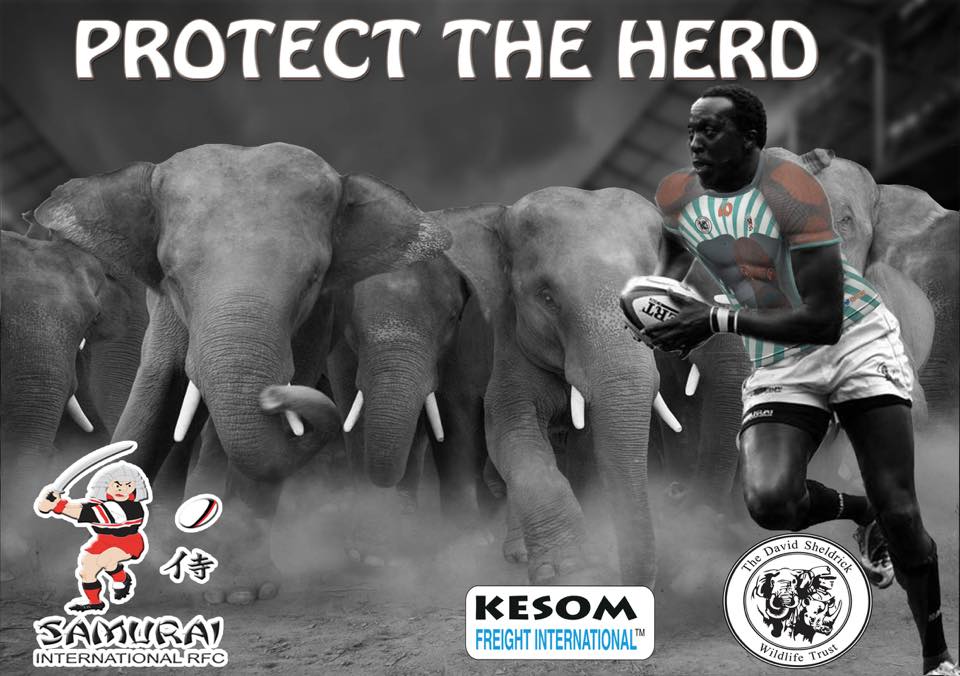
And we will #ProtectTheHerd


Samurai 7s 2015

Ignacio Martins, Paco Hernandez, Glen Rolls (Spain), Pierre Peres (France), Youness Hou (Maroc), Oscar Ouma, Felix Ayange, Sammy Oliech (Kenya), Luke Crocker, Elliot Frewen (Wales), Michael Fedo (Scotland), Sam Isaacs (England)

Samurai 7s 2016

Ignacio Martins, Paco Hernandez (Spain), Michael Fedo, Scott Wight, James Fleming, Dougie Fife, Jimmy Johnstone, Darren Gillespie, Nick McLennan (Scotland), Patrice Agunda, Churchill Ooko, Dan Sikuta (Kenya), John Dawes (Germany)

PS: Yeah another plug to buy a shirt & help raise money for the DSWT by clicking here


Samurai: Olympic Samurai

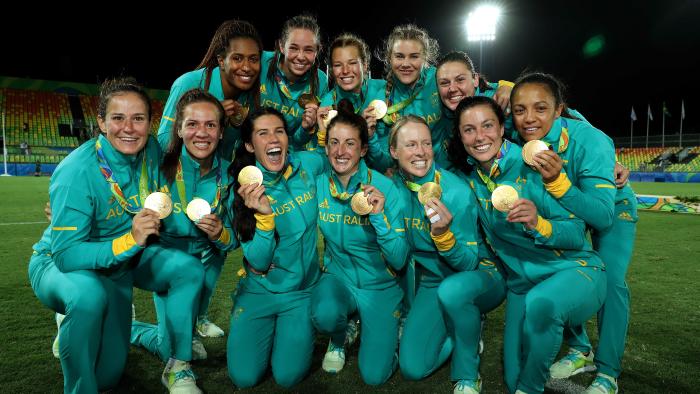
If you, like me, watched enthralled as Australia won the Women’s and Fiji won the Men Olympic Rugby 7s Gold then hopefully you agree we have seen a fantastic showcase for the game of Rugby 7s.  From the excitement and fast paced action of the games where, on their day, any team can beat any other, to the sportsmanship of the players and the incredible humility displayed by the Fijian team when they received their medals.

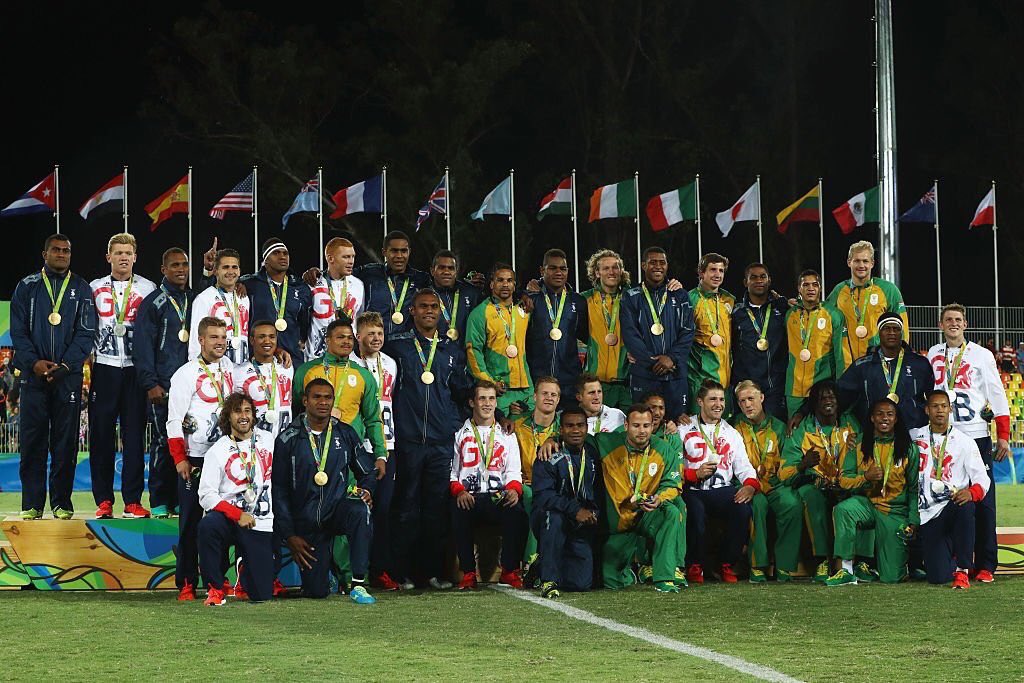
Fiji Men Win Rugby 7s Gold & Global Respect In Rio 2016

In among it all you may have noticed that the 12 teams in each tournament are not necessarily the teams you would have expected if you don’t follow the 7-a-side code.  Who would have thought that the likes of Ireland, South Africa and Samoa would not have competed in the Women’s competition when the likes of Columbia, Japan and Spain were there.  Or in the Men’s competition there would be no Ireland, Samoa, Tonga, Italy or Canada all of whom you would, quite reasonably, expect to be present at a 15-a-side RWC.

Given these quite possibly weren’t the National Teams you were expecting you could easily be forgiven for not having heard of almost all of the players involved as well.  You aren’t alone, Woodward and Butler demonstrated an almost comical lack of knowledge of Rugby 7s in their “commentary”.  Woodward’s constant mixing up of players and his suggestion to team GB in the final seconds of the semi final of “kick it long” will live long in the memory!

Australia Ladies Win Gold In Rio 2016

If you believe the traditional rugby press before the Olympics, you’d be excused for thinking that all of the “Rugby Superstars” had stayed away. The truth, of course, is somewhat different in that Rugby 7s has it’s own superstars and has done for a while now.  Without sufficient preparation and conditioning the superstars the media referred to were never going to make the cut for Rio.  Many tried and failed such as Quade Cooper, Liam Messum or Bryan Habanna.  Of course some have made it but almost to a player they have got previous Rugby 7s experience on the World Series earlier in their careers. Sonny Bill Williams (sadly injured in New Zealand’s opening game) is possibly the exception.  However his much lauded off loading game might well be considered the norm in Rugby 7s particularly by the insanely gifted Fijian players who have set the Rugby 7s world alight by winning back to back World Sevens Series titles and then Olympic Gold under the coaching regime of Ben Ryan.

Nate Ebner representing Samurai International at the Hong Kong 10s

That doesn’t mean that cross over athletes cannot make the grade for 7s at the Olympics if they are prepared to put everything else on hold to do so.  Nate Ebner, an NFL Superbowl winner with the New England Patriots in 2015, is a case in point.  However his fellow NFL athlete Jarryd Haynes just missed out on the final 12 for Fiji despite making the Ben Ryan’s training squad before the tournament which shows the incredibly high standards Rugby 7s is setting for players.

So if you don’t watch the World Sevens Series (You should by the way it is an amazing, truly Global sporting event.) and you haven’t heard of these Rugby 7s players because most of them aren’t playing Rugby 15s you might be wondering where they all come from   Outside of the World Sevens Series and the associated qualification process there isn’t, currently, a global club circuit below the International scene.  In most Countries there aren’t national or regional circuits either**** with most professional rugby 15s clubs paying little or no attention to rugby 7s for anything other than player recruitment. The truth is, after school, the bulk of the players gain experience playing on the invitational circuit which includes famous tournaments such as the Dubai 7s, the Safari 7s, The Gold Coast 7s and The Hong Kong 10s.  The teams that play on that circuit vary from established invitational teams such as Penguins or Asia Pacific Dragons to more social teams like The Titans and the Wyvern Harlequins. Players come from all over the world to make these events vibrant rugby festivals which hopefully you will have got a taste of watching the Olympics this year.  Obviously some clubs do better at this than others and their fortunes wax and wane over the years as these clubs come and go.

One club in particular has a record that, as a player and coach pathway, is not only unrivaled in the world of Rugby 7s but is unrivaled in almost any sport.  To put this bold and borderline arrogant claim in perspective: Of the 144 Rugby 7s Olympians in the Men’s competition one invitational rugby club, called Samurai International, has helped in some way with the identification, development or preparation of players in 8 of the 12 teams at Rio 2016.  The total number of players* involved that have played for Samurai is 43 which is almost a third of those involved at the 2016 Olympics.  Of the four countries without a playing representative only Japan have not had a player involved in their wider training squad prior to Rio that has also been involved with Samurai.

What is also worth noting is that coaches and staff of 7 of the 12 teams** at the Olympics in Rio have also worked with Samurai previously.  In fact USA 7s Head Coach Mike Friday is the current Samurai Chairman

The impact of Samurai is not just felt at the Olympics in Rio itself but throughout the four year qualification cycle and beyond.  Samurai have, as far as is known, helped either as a player pathway for or have had coaches go on to work with 5 African nations (Zimbabwe, Kenya, South Africa, Nigeria and Morocco), 10 European nations (Ireland, England, Wales, Scotland, Italy, France, Spain, Portugal, Netherlands, Germany, Israel and Lithuania), 4 nations from North America (USA, Canada, Jamaica and Guyana ) 4 nations from Australasia (Australia, Samoa, New Zealand, Fiji) and 3 nations in Asia (China, Sri Lanka and Hong Kong).  Their network and eye for talent really is second to none!

Samurai don’t just have a presence in the Men’s competition, in the Women’s competition there were many previous Samurai players notably in the Australian and Team GB sides. Australia were coached by former Samurai player and Samurai coach Tim Walsh while Team GB assistant coach Richie Pugh is a former Samurai player.  Chris Cracknell, a former Samurai player was coaching the Fiji ladies team.  Particularly pleasing for the Samurai management team was the selection for Team GB of former Rugby League player Jo Watmore who made her Rugby 7s debut for Samurai at Amsterdam a few years back.

So a club which has helped provide a third of all the players and two thirds of all the coaches in the Men’s Olympic Rugby 7s and helped provide large numbers of players and coaches for the Women’s game.  What could be better that you ask?  Well, let’s look at the medalists in the Men’s competition from Fiji, Team GB and South Africa.  Of the 36 players who won a medal in Rio, 17 have played and been part of the development pathway provided by Samurai.  On top of that the three head coaches, Ben Ryan, Simon Amor and Neil Powell, have all coached Samurai with Amor and Powell also having played for Samurai.

17 Samurai Alumni Out Of 36 Olympic Medalists In The Men’s Rugby 7s In Rio

In the Women’s competition the head coach of Australia, Tim Walsh, is a former Samurai player and coach who had this to say about Samurai and it’s founder Terry Sands:

“Thank you Terry Sands, the man behind Samurai 7s, for nurturing so many World Class 7s players, coaches and now Olympians. I was one of the fortunate players and later as a coach to benefit from his elite setup. To coach and play with the best is a privilege.” 

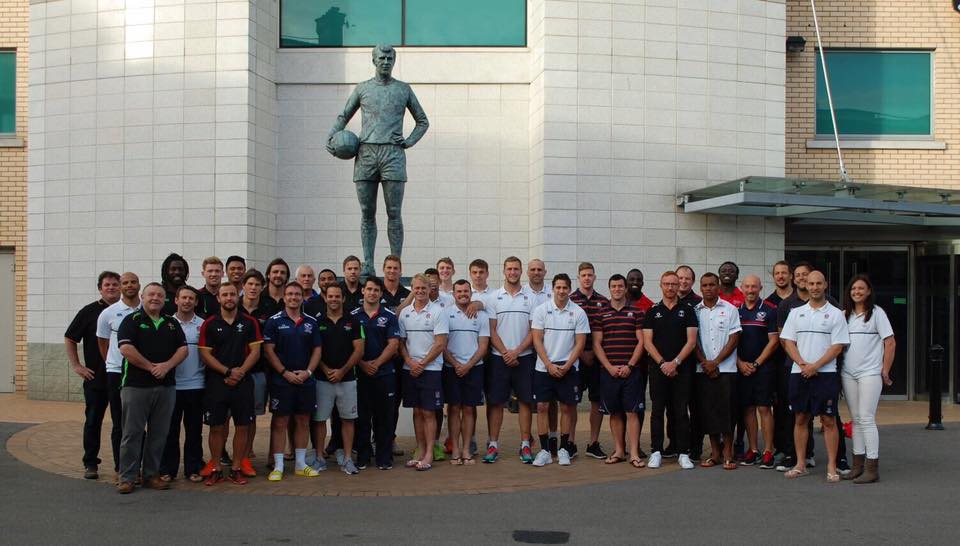
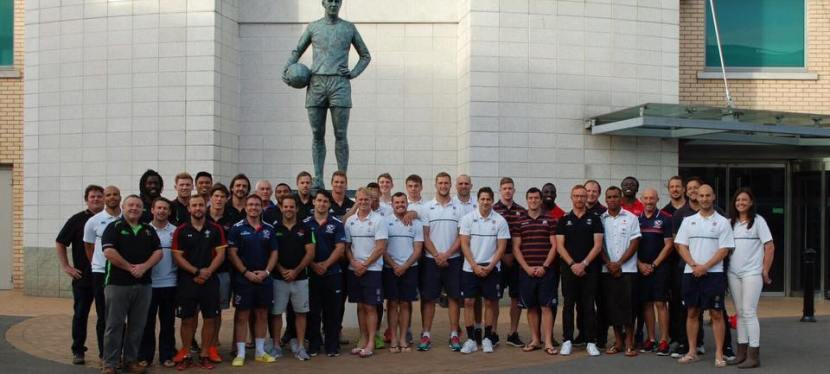
This achievement in Rio isn’t a one off either, at the last leg of the World Sevens Series in London this year there were circa 50 players and staff from 12 nations who have played or worked with Samurai.  This was about average across the World Sevens Series as a whole and even surprised the Samurai management team when they sat down to work out the exact numbers.  To try and capture this achievement in Samurai’s 20th anniversary year the photo below was taken at the team’s hotel at Chelsea FC the day before the tournament.

Samurai Alumni At The IRB London 7s 2016
Portugal (3), Samoa (2), New Zealand (3), Scotland (2), USA (3), Kenya (2), Brasil (1), Fiji (3), Wales (3), England (12)
Missing From Photo: South Africa (10), Kenya (2), Canada (1), England (1)

Rugby: Stockholm, Sweden 2014 (The Force Was Not Strong Enough)

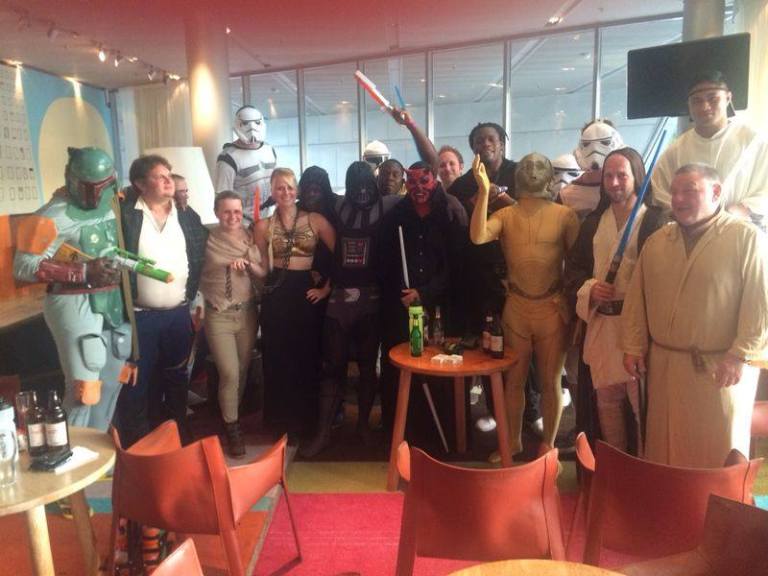
In a galaxy not so far away (well, Stockholm to be precise), a ragtag group of rugby warriors descended upon the Stockholm 10s tournament in what would double as my last hurrah as a free man. The Titans RFC, disguised as various characters from Star Wars, brought their unique brand of rugby chaos to Scandinavian shores.

Our motley crew featured an impressive cast: Mark Dean channeling his inner Peter Griffin, Emma Mark & Laura Hughes both making a fantastic Princess Leia, and Terry Sands doing his best Yoda impression. The tournament started brilliantly, with the Force clearly on our side. Tanimo “Mace” Samoa lived up to his namesake Mace Windu with some purple-lightsaber-worthy runs, while Michael Adeniya and Dean Gardner formed a formidable storm trooper duo in the forwards. Temi Okenla, playing the odds as C3PO, orchestrated play from the backs alongside David Stanton’s Jedi-esque precision passing.

As we progressed through the group stages, our confidence grew. Paul Archer, David Fenlon, and James Doherty brought the kind of energy you’d expect from a Millennium Falcon engine room, while Michael Hooke and Olisa Ofudiama provided enough firepower to destroy a Death Star.

Then came the fateful semi-final against the Stockholm Exiles. We were up at half-time, playing some of our best rugby of the tournament. In what will go down as either the best or worst tactical decision in Titans history (depending on who you ask), someone produced a bottle of Sambuca during the half-time team talk. In true Titans spirit, it seemed like a brilliant idea at the time.

Let’s just say the Dark Side of the Force (and Sambuca) took over in the second half. Our previously tight defensive line began to look more like the disorganized Mos Eisley Cantina, and our attacking moves had all the coordination of a droid with a loose wire. The semi-professional Stockholm Exiles, probably wondering what exactly they were witnessing, took full advantage and eventually overcame our lead to knock us out of the tournament.

“We could smell the alcohol on you guys from the touchline”

Oriol Ripol: Head Coach, Stockholm Exiles

Despite the loss, the tour embodied everything great about amateur rugby: friendship, questionable decision-making, and creating memories that will last a lifetime (even if some parts of the weekend remain mysteriously fuzzy). The Stockholm 10s may not have ended with us lifting the trophy, but as a stag do and tour, it was an absolute triumph.

As Master Yoda might say: “Judge us by our Sambuca consumption, do not. Powerful rugby warriors we are… until half-time refreshments, we take.”

May the Force (and better half-time decision making) be with us next time.

NB: Wick Nakely (Not his real name) was absolutely, postively and most definitely not on this tour. Just ask his ex wife.

Nick Wakely at the Stockholm 10s, 2014

Nigeria Rugby: Botswana

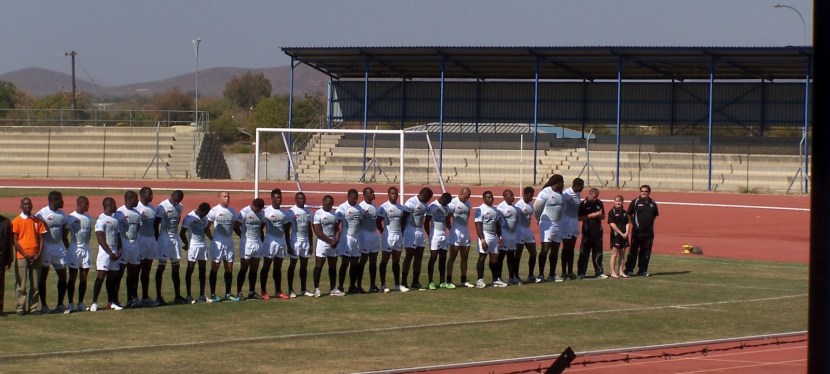
It’s been a week since I returned to the UK from the Africa Nations Cup with the Nigerian team in Botswana.  I’ve had a chance to reflect on what happened and evaluate what was achieved in the two weeks as well as look forward to the next steps for Nigerian rugby.

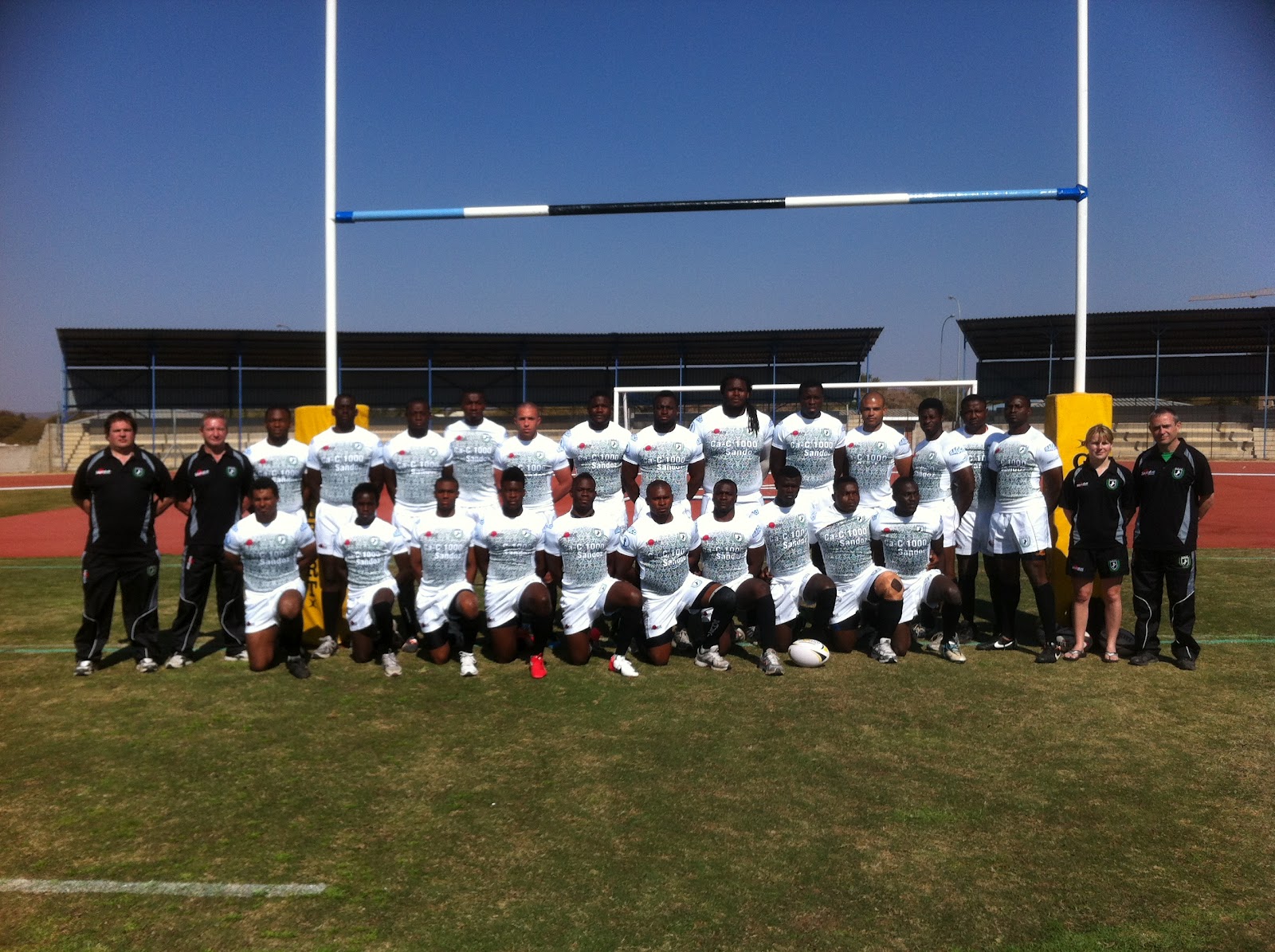
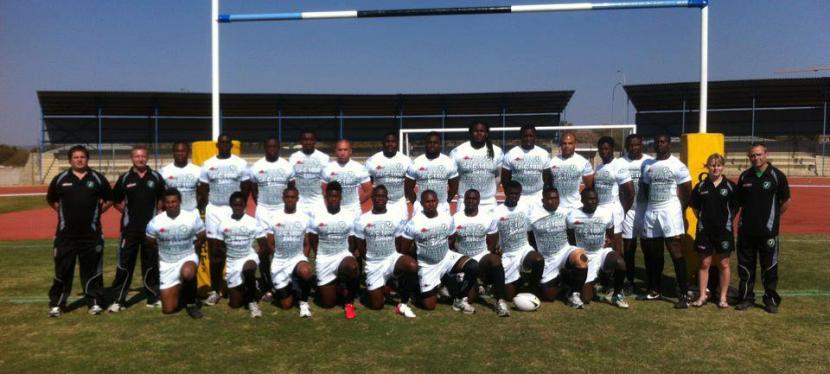
Team Photo v Mauritius 2012

The Nigerian squad, 24 players selected from players based in Nigeria, South Africa and the UK (and considerably more domestic based players than countries like Italy, Argentina and Samoa), went to Botswana with no track record and sat right at the bottom of the IRB rankings to play three test matches against teams with considerably more experience than them.  The last test match played by Nigeria, against Mauritius in 2011, saw Nigeria go down 45-10 to a much superior side and despite producing world class players to the benefit of other nations Nigeria had yet again struggled to make an impact.  This year we faced Mauritius again as well as 1995 world cup qualifiers Ivory Coast (41st in IRB rankings) and the hosts Botswana.  A difficult challenge but one the team were confident they were up for.  The players had come up with a team call: “One Team One Dream” and part of that was the belief that, despite the odds being against them, Nigeria could beat any side in the tournament.

Due to a late withdrawal of Cameroon from the competition the third test match against from Botswana was cancelled as the draw was, most unfortunately, altered to enable the tournament to proceed.  I felt at the time and still do now that more transparency is needed when decisions like that, changing a tournament draw, are taken but I also understand that the organisers were in a very awkward position and had to move quickly to make things work.  I guess a lot of this is part of African rugby’s learning curve and lessons learnt in Botswana can and should be taken forward to future tournaments.

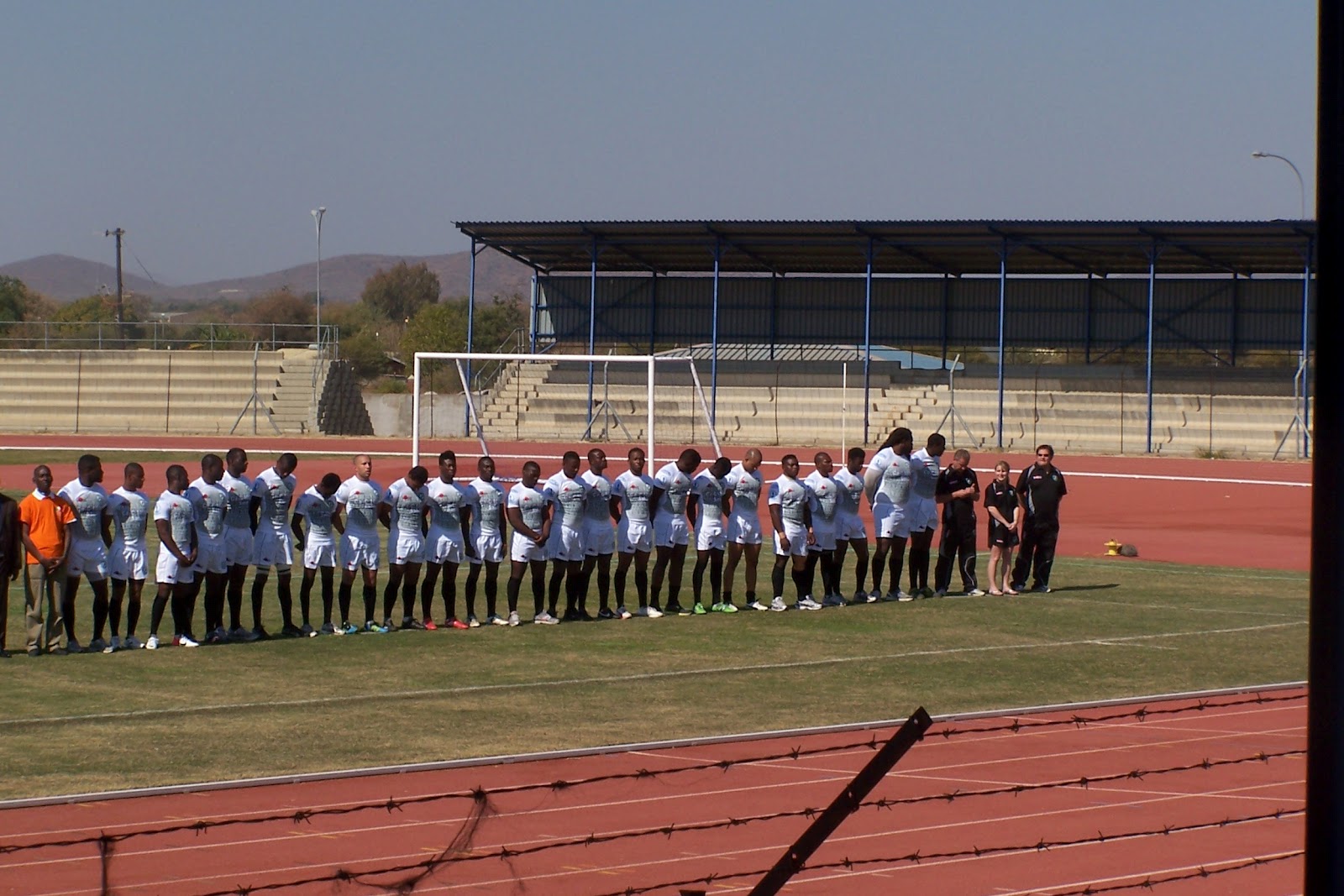
National Anthem

The first match against Mauritius saw us put early pressure on them but basic errors cost us as they scored two break away tries and raced to a 23-6 lead at halftime.  We lost 26-22 but despite the scoreline we showed everyone how far Nigerian rugby had come in 12 months.  We outscored them 3 tries to 2 and all of their tries came from our errors and not from their phase play.  Our tries came as the result of well worked phases of play and when we got it right they had no answer to our powerful runners.  At the end of the game the Mauritius players celebrated but looked more relieved than anything else.  I believe we simply ran out of time to make up for our early mistakes and five more minutes would have seen us victorious.  Imagine if we had been able to get in a few warm up games rather than having to use the first half to learn how to play together just three days after most of the squad met for the first time.

Before Ivory Coast Game

That, for me, was the kicker – We’d had virtually no preparation time together prior to the tournament and this was something that all the players commented on in their individual debriefs and the management team were painfully aware of.  The only way to address this realistically is an increase in funding to enable Nigeria to develop its domestic game, identify overseas players and run regular training camps.  In comparison Mauritius had a ten day training camp prior to the tournament and it showed.  My honest opinion is that had Nigeria been able to do likewise then we would have won both out test matches and progressed to group 1B next year.  The following information shocks everyone I’ve told:  We get ZERO funding from the IRB, ZERO funding from the Nigerian government, ZERO funding from the Nigerian Olympic organisation (despite Nigeria having a very realistic chance of qualifying for Rio in 2016) and we don’t have a thriving domestic game to provide funding to a union either.  Every penny we spend comes from the generous support of sponsors.  Even with CAR paying for flights we have struggled. Unfortunately due to the peculiarities of CAR policy on booking flights we wasted £15,000 on flying players to Lagos from the UK to catch a flight to Botswana via SA rather than the CAR flying them direct (at the same cost to them) and leaving us £15,000 to spend on developing the game in Nigeria and preparation for the team.  Personally I intend to continue to lobby for more support from the likes of the IRB.  Just a small amount of help would reap dividends for Nigerian rugby.  I would sincerely hope they should be able to see that its a worthwhile investment in developing the global game after what has been achieved on a shoe string.

The second test saw us lose to the Ivory Coast 29-17.  They boasted players who had played in the 1995 RWC against France, Tonga and Scotland and a settled squad who had played together consistently over the last few years.  Again mistakes cost us as they matched our physicality in a way that Mauritius had failed to do.  However the fact their loosehead prop, their captain and a world cup veteran, was yellow carded ten minutes into the match for repeatedly failing to bind correctly in the scrum showed dramatic improvements in the Nigerian scrum which continued to put them under pressure throughout the game.  Not bad results from one hour long session with the pack by our forwards coach.

Brothers

So what can I take from this tour?  I believe that we’ve more than held our own against the other teams in group 1C despite the scorelines.  The improvements in performance after very little preparation demonstrate the possibilities if we can get one or maybe two training camps in each year. The players, almost all of whom were amateur, reacted well to the environment and the large step up in standard and with experience will only improve in confidence and ability.  Nigeria has always produced exceptional players and with such a vast pool of potential players both domestically and abroad it just requires the infrastructure to thrive.  I also realised that we had started tapping into the Nigerian community.  Before the match against Ivory Coast I told the players that they weren’t alone and that we’d received 1000s of messages via social media from complete strangers at home voicing their support for their national team.  Given the low profile currently of the game in Nigeria this spoke volumes of the work being done behind the scenes to improve the situation.  We also had messages of support from England stars such as Topsy Ojo, Ayo Ola Erinle and Ugochukwu Monye.  We also had vocal support from young Nigerians in the premiership academy sides in England one of whom tweeted how he’d rather play for Nigeria than England.  Players who were injured or not released by clubs to represent Nigeria also sent in messages to the players.  Rob Worrincy had just celebrated a cup win with Halifax RL but was constantly messaging us to find out how it was going.  One Team One Dream.  It’s not just the players in the squad but all the guys who couldn’t be there as well.

Nigerian rugby has finally arrived and the best thing about it is that is still nowhere near achieving its remarkable potential.  It’s late to the party; it is still very raw but we’ve finally seen glimpses of what could be.  The players believe, I and the rest of the management team have always believed but now others are starting to as well.  The human potential in Nigeria itself, 160 million raw athletes, combined with fantastic players living overseas is a rugby phenomena waiting to happen.  Next year, particularly if the Africa 1C tournament is hosted in Nigeria, then with the squad we have we could realistically look at going as favourites.  Now there is something most people wouldn’t have thought possible if they watched Nigeria lose 45-10 to Mauritius just twelve months ago.

One Team One Dream

We always come back to “One Team One Dream”.  When people asked me what it meant they assumed it referred to the 24 players winning two test matches and continuing on a path that might lead to the RWC in England in 2015.  It is so much more than that.  It is one team.  But that team is not just the national team players it is grass roots players in Nigeria, new and old supporters, families, coaches and all those working behind the scenes to drive the game of rugby on in Nigeria.  The dream was never about world cup qualification in 2015.  That was never the point as it would be too short sighted.  The dream is bigger than any competition or player, it’s about the emergence of a thriving rugby community in Nigeria, engaging young and old alike in a passion for the great game itself.  These players, who went to Botswana with personal ambitions, also went knowing they were part of something incredible.  They were there at the start of the Nigerian rugby journey and it was their responsibility to help create a legacy for Nigeria.  To me that is what it really  meant and that the dreams and convictions of a handful of players mean that there is now a real chance for Nigerian rugby to take the next step.

As the dust settles and the players reflect on the tournament I hope they are proud of themselves, I know I am incredibly proud of each and every one of them.  It wasn’t perfect, our performances weren’t perfect and we have a huge amount of work to do BUT without what happened in Botswana we wouldn’t have the chance to take that next step.  It’s a dream, but not one man’s dream.  It comes from a deep rooted shared desire and belief.  Many of the players told me they know that they will probably not be involved at international level again as we move forward and in a strange way they’re almost proud of that.  They know that although their international career has been fleeting it means that there was a shirt there to be pulled on by the next player to represent Nigeria.  It means that there is something for players and potential players in Nigeria to aspire to, to look up to and take on-board the values that Rugby imbues.  It means that players, like the Watson brothers or the Itoje brothers, can opt for Nigeria knowing that they aren’t taking a huge chance with their international career.  They can also be part of something remarkable, a dream that is slowly becoming a reality.

Nigeria Rugby: Dark Horses Or Black Stallions?

If you’ve been at any of this season’s early UK rugby 7s tournaments or were fortunate enough to go to the Dubai 7s last December, you might have noticed that the Nigerian national team were in the programme. What you may not know is that last year Nigeria, with less than two days preparation and a squad thrown together at the last minute, managed to finish third in an IRB rugby sevens tournament in Morocco. 

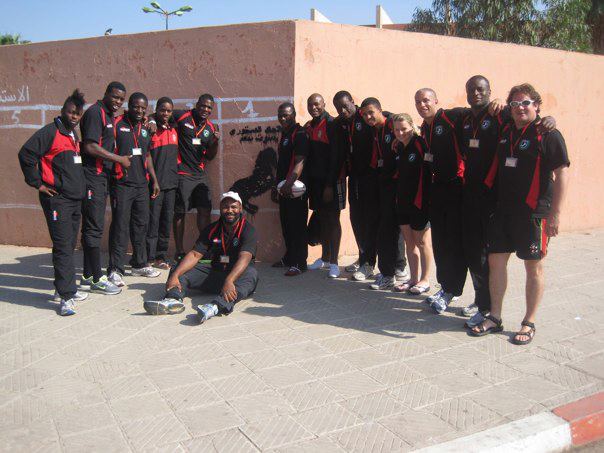
Nigeria At Marrakesh 7s 2011
You also might not know that there have been Nigerian players competing at the very top level for the last four decades. When you hear the names of such rugby luminaries as Steve Ojomo, Adedayo Adebayo, Victor Ubogu, Ugo Monye, Ayoola Erinle and Martin Offiah, you realise that the previous lack of international rugby in Nigeria has meant that exceptional Nigerian players have had to opt to play for other nations to fulfil their potential.

You might ask yourself “why is the Nigerian national team playing over in the UK?” The main reason is that most of the top class players eligible for Nigeria live in the UK. The Nigerian Rugby Football Federation (NRFF) currently has 14 clubs playing in Nigeria, giving it a remarkably small pool of players to draw from. In contrast, there are hundreds of clubs in London alone, most of whom have at least a Nigerian winger. The UK has traditionally been home to a large ex-pat Nigerian community and it made sense for the NRFF to tap into this player pool and include them in the  national squad where possible. This was a huge step forward for Nigerian rugby as it meant that players like David Akinluyi (Northampton, Cambridge and Esher) and Joseph Mbu (London Wasps and Birmingham Bees) could realistically opt to play for Nigeria. Nigeria are, of course, not the first nation to have utilised large numbers of eligible players based overseas; Argentina, Tonga, Morocco and Samoa have been predominantly made up of players who ply their trade outside their countries’ domestic leagues. David Akinluyi had actually been training with the England 7s squad prior to this development; his decision to play for Nigeria, based on the progress made by the NRFF, is certainly a coup for Nigerian rugby.

Nigeria At The Bury St Edmunds 7s 2012

At the IRB & Confederation Africaine Rugby (CAR) tournament in Marrakesh the NRFF were refused entry Visas by Morocco. This prevented any home grown players flying over from Nigeria to play in the tournament. The only way to compete was to bring a totally different squad out from the UK. Luckily, we found eleven players who could get the time off work and flew to Morocco the next day. Nigeria (ranked
5th from bottom in the world rankings) achieved a 3rd place finish, beating Senegal (ranked circa 53rd), Ivory Coast (ranked circa 46th) and Burkino Faso. They only lost to Morocco and Tunisia – both of whom have extensive experience as guest teams on the IRB World Series – who went on to contest the final. To put this in football parlance imagine East Timor beating Ukraine, Belgium and Wales at a FIFA ranking tournament.

One team one dream

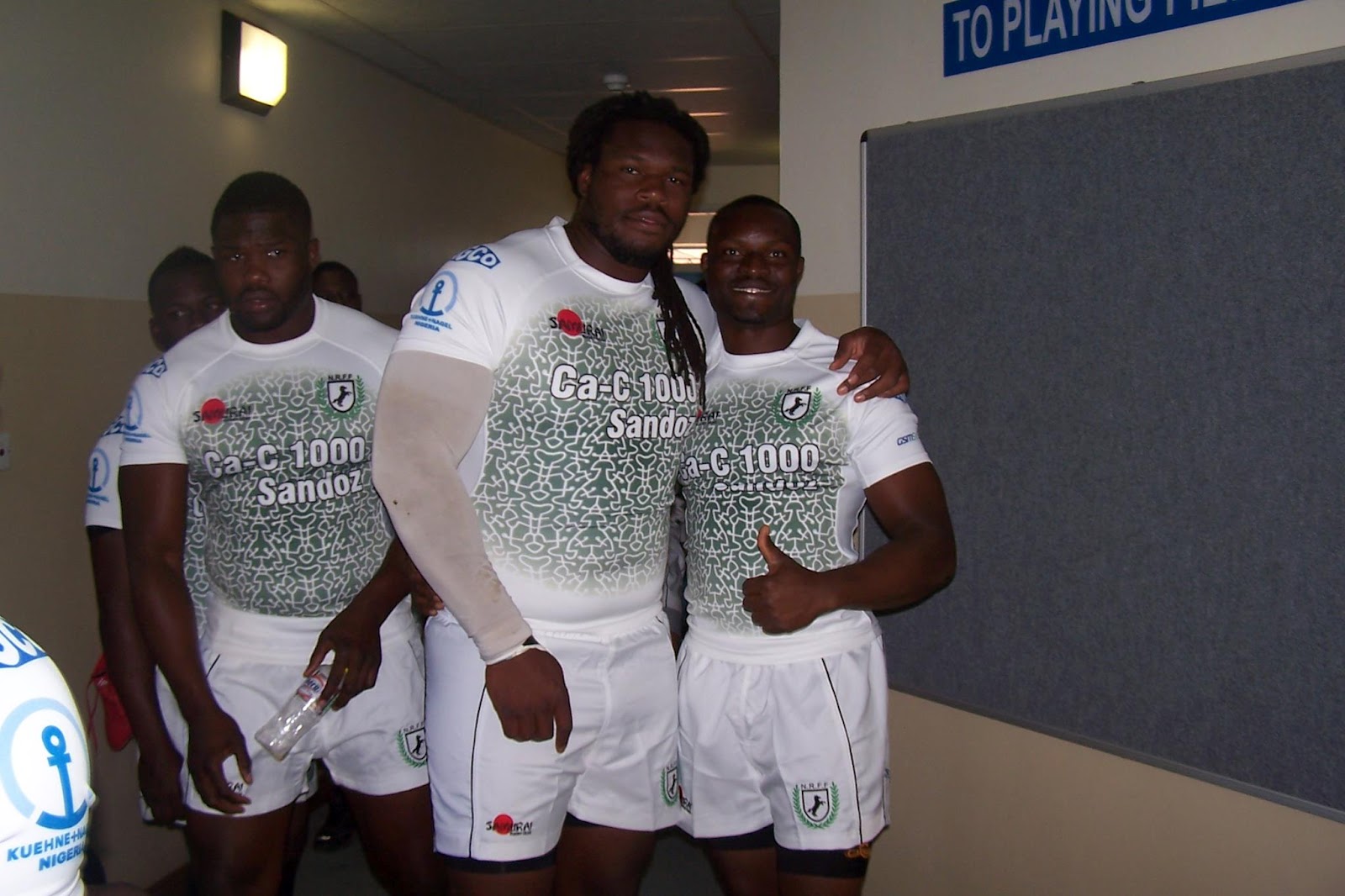
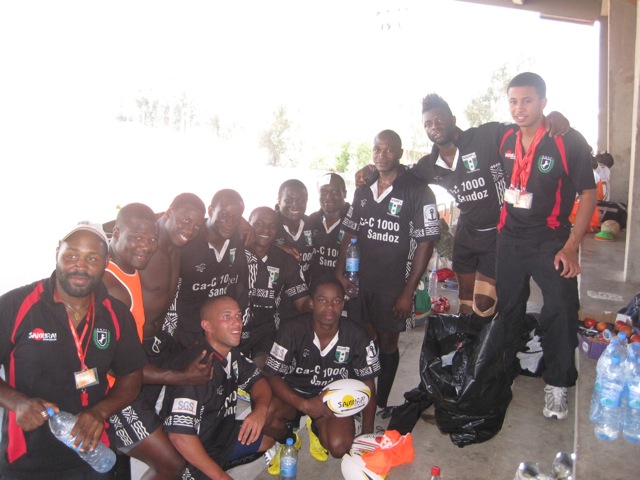
Such an achievement is even more impressive as everybody involved is a volunteer. From the head physio, Emma Mark, to the coaching team of Steve Lewis, Joseph Mbu and Martin Olima; everybody is committed to Nigerian rugby development and give their own time and effort to make it happen. But it’s not just those directly involved with the NRFF who are instrumental in the team’s progress. Without the support of the likes of Andy “Boyo” Howells (HFW Wailers), Adam Hurst (Apache) and Terry Sands (Samurai 7s), who help identify and give grass time to Nigerian players like James Doherty and the Ajuwa & Akinluyi brothers, the team would struggle for top level experience. Without Samurai Sportswear donating a kit for this summer, Nigeria, who have no IRB funding or Sponsor, would not have had a playing kit. This was the first time Nigeria actually had their own kit; previously using old regional kits from Nigeria. Having their own national rugby kit was a big deal! The pride on the players’ faces when they pulled on their nation’s playing kit at Bury is something I won’t forget.

So what next for Nigerian Rugby? It’s a full year; looking at prospective players in rugby 7s tournaments in Nigeria and the UK, and the two IRB competitions being run by CAR. It seems incredible that Nigeria will be participating in two IRB tournaments:

• The African Cup in Botswana for the 15s team (July);
• IRB + CAB tournament in Morocco for the 7s team (September).

The 15s will play three full international test matches against Mauritius, Cameroon and Botswana. A large number of newly capped players will come from the UK. If the team fulfil even some of its potential, they will have the opportunity in 2014 to play for the honour of participating in the RWC in England in 2015. Nobody involved with the NRFF believes that this is anything other than a long shot but, for the first time, they don’t believe it is impossible either. For the short game, the chance of making a RWC is even greater having just one tournament to go for qualification. At the end of September this year the Nigerian 7s team travel to Morocco to see if they can better the performance that saw them finish 3rd last year and qualify for the Rugby World Cup 7s in Russia in 2013.  They will be up against teams like Morocco, Tunisia, Zimbabwe and Namibia all of whom have much more experience, player depth and funding.
Dark horses? Black stallions certainly. It is my belief that, if not in 2013 or 2015, it won’t be long before you see the Nigerian rugby team at a World Cup or participating in the Commonwealth or Olympic Games. Given the fantastic reaction from the rugby community for the Nigerian team, that can only be a good thing for rugby.

Whatever happens next the Nigerian rugby team, and its fantastic friends & supporters, will continue to add to the UK circuit; enriching the rugby scene and acting as ambassadors for their country and the game. I look forward to seeing you around the tournaments and celebrating the great game of rugby – Nigeria style. As you’ll hear from every member of the squad and management team, this progress is all down to one very simple thing: “One team. One dream.”

One final thought: as Nigerian Rugby moves forward to hopefully fulfil its huge potential, the next Ubugo, Ojomo, Monye, Erinle or Adebayo might just opt to play for Nigeria. Wouldn’t that be something for the development of rugby as a truly international sport?