Forged Fast: Shogun RFC and the Art of Rapid Team Building

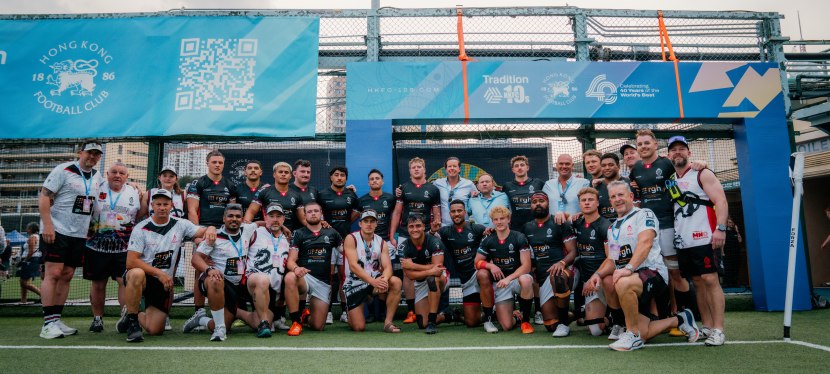
What happens when you bring together players based in multiple different countries, give them 72 hours to become a team, and ask them to compete at The World’s Best 10s in Hong Kong? You find out a great deal about values, trust, and what high performance actually means under pressure.

There’s a well-worn idea in team sport that you need time to build something real. Shared history. Enough training sessions to develop instinct. The accumulated trust that comes from making mistakes together in low-stakes environments before the stakes actually matter. It’s a reasonable idea. It’s also, in the world of invitational rugby, almost entirely impossible.

The Hong Kong 10s doesn’t give you that luxury. You have a window — days, not weeks — to pull a group of individuals into something cohesive enough to compete. At Shogun RFC, that’s not a problem to be solved. It’s the whole point. And this year, I think we got close to cracking it once again.

But Shogun has always been about more than results. It’s about giving players opportunities they might not find elsewhere — a stage, a jersey, a chance to compete at a serious tournament alongside talented people who share their values. And it’s about creating something that lasts well beyond the final whistle: memories that people carry with them for the rest of their lives. That combination of genuine competitive intent and genuine human investment is, I think, what makes this club worth being part of.

Selection: values before geography

Our squad for Hong Kong drew players living in Australia, New Zealand, Japan, and Fiji. On paper, that’s a logistical headache. In practice, it’s one of the great privileges of rugby — a sport with a genuinely global culture that travels well across borders, and where shared values cut through the noise of different backgrounds faster than almost anything else.

The selection philosophy wasn’t simply “find the best available players in those regions.” It was: find people who already understand what we’re trying to do, who carry the right instincts around effort and attitude, and who will add to the environment rather than simply perform in it. There’s a difference, and it matters enormously in a short-form tournament. For some players, this is also a genuine platform — an opportunity to compete in a well-organised, high-quality tournament that might not otherwise be on their horizon. We take that responsibility seriously.

“We weren’t just selecting athletes. We were selecting culture carriers — people who would hold standards from the moment they arrived.”

That philosophy was driven by four men whose combined experience in World Rugby runs deep: Barry Gallagher, Milton Froggatt, Terry Sands, and Jimmy Maher. Between them, they have networks that span every major rugby-playing nation, and more importantly, they know what good looks like. Not just technically — culturally. The players we brought together weren’t strangers to each other in the way that matters most: they arrived already understanding the unwritten rules of the game, and of the team.

Shaping the environment deliberately

Rapid team building isn’t accidental. It requires deliberate architecture — careful choices about how time is structured, what shared experiences are created, and who is responsible for which parts of the environment. You don’t stumble into trust. You design the conditions for it.

One of the things I’ve learned across years of working in high performance environments — military, sport, consultancy — is that environment shapes behaviour more powerfully than instruction. Tell people what to do and you get compliance. Build an environment where the right behaviours are natural and reinforced, and you get something altogether more robust: genuine culture.

The team behind the team this year understood that, and delivered it.
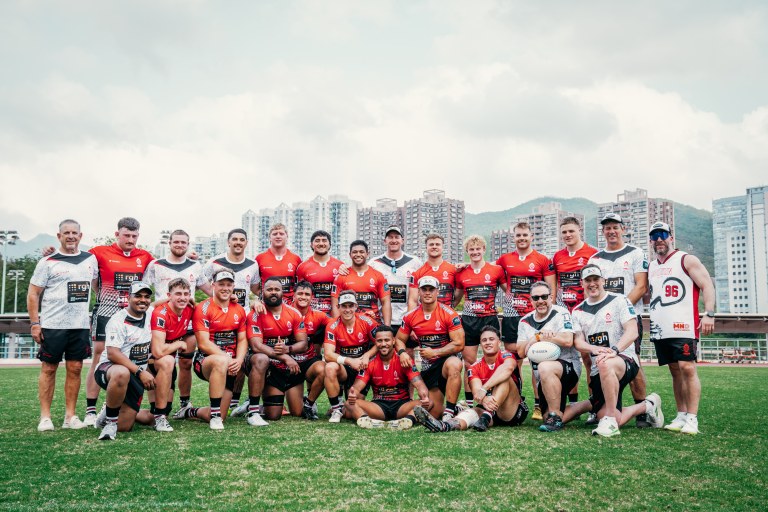
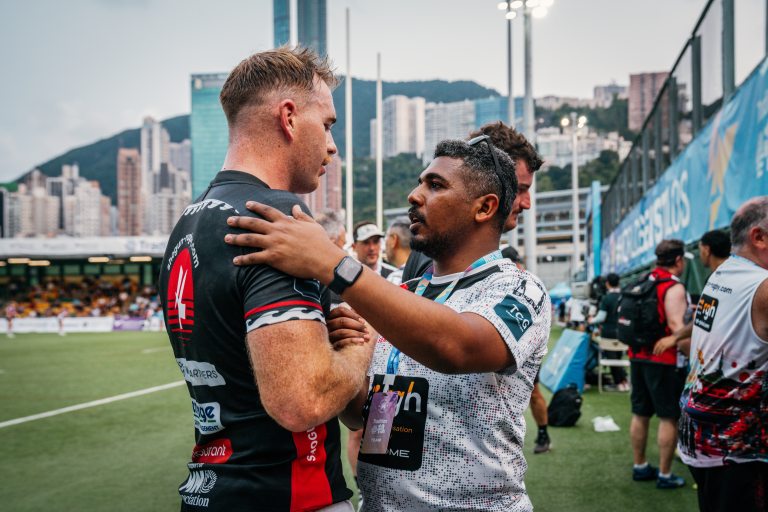
Drew Weaver, and our kit sponsor Tessen, made sure the players looked the part from the moment they put the shirt on. That’s not vanity — it’s identity. The moment you hand a player well-presented, professional kit, you signal something about what this team is and what it expects. Standards are set in the small things, long before a ball is kicked.

Boris Pineless and Lucy Howard handled medical and performance with the rigour you’d expect at any professional set-up. Keeping players on the field across a multi-game tournament, managing load, treating niggles before they become issues — it’s unglamorous work that sits almost invisibly behind everything else. Until it isn’t there, at which point you notice exactly how much it mattered.

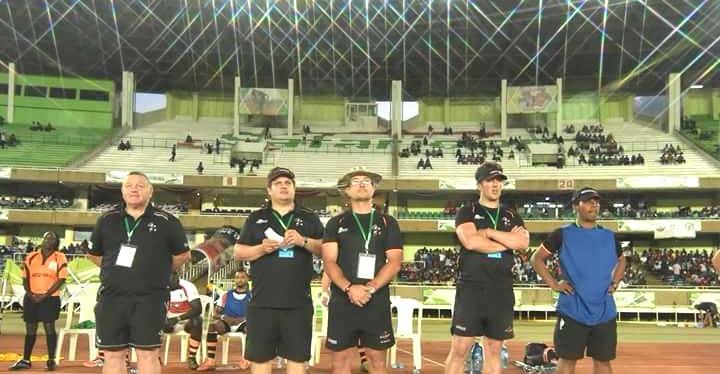
Nick Wakley and Jimmy Maher drove the coaching, and the quality of the preparation showed. The system was clear, the structures were communicated quickly and simply, and the players bought in. In a 10s environment where decision-making under fatigue is everything, having genuine clarity around shape and role is non-negotiable. They delivered it.

And then there’s the broader environment — the spaces between the rugby that are often where the real team building happens. Fahad Adil, Milton Frogatt, Barry, Gallacher and club founder Terry Sands worked to make sure that time was used well: that players were supported, socially connected, and in the right headspace. Connections were built over meals, in transit, in the moments before sleep and after training. None of it was accidental.

Learning reviews: accountability built into the rhythm

In a tournament format, you don’t have the luxury of a training week between games to address what isn’t working. You have a recovery window — sometimes a matter of hours — and whatever you do with it will either sharpen or blunt your edge going into the next fixture. That makes post-match review not an optional extra but an operational necessity.

After each game at the Hong Kong 10s, we ran a structured learning review. Not a debrief in the loosest sense of the word — not a conversation that drifts between highlights and excuses — but a disciplined process with a clear purpose: to extract what happened, understand why, and carry the right lessons into the next match.

The individual accountability piece deserves particular attention, because it’s the part that most environments handle poorly. Individual performance review — when it’s honest — creates discomfort. That discomfort is the point. It’s the mechanism through which standards are held, and the signal to every other player that performance is taken seriously regardless of reputation or seniority.

But accountability without psychological safety is just blame. The way feedback is given matters as much as the content of the feedback itself. In a team assembled rapidly from across the rugby world, you’re working with people who have different experiences of criticism, different cultural norms around directness, and different levels of vulnerability in environments they haven’t fully settled into yet. The review process had to be honest enough to be useful, and safe enough to be heard.

“Feedback lands when the relationship is strong enough to carry it. In a short-form tournament, you have to build that relationship before you need it — not at the moment you need to give hard news.”

This is where the environmental work done before and between games paid dividends. Players who feel valued, who understand the purpose of the team, and who have already built some degree of genuine connection with the people around them, are far more receptive to honest feedback than players who feel evaluated but not invested in. The coaching staff and management understood this, and structured the reviews accordingly — direct, specific, and grounded in respect for every individual in the room.

The result was a group that genuinely improved across the tournament. Not just tactically — though that was visible — but in terms of collective ownership. By the time we reached the semi-final, we had a team that understood its own performance, could discuss it honestly, and was genuinely committed to getting better together. In days, not months. That’s the return on doing the review process properly.

Execution: a narrow semi-final and a hard lesson

The tournament itself vindicated the approach. Shogun played well — cohesively, with energy and purpose — and reached the semi-finals. We played the eventual tournament winners, YCAC, and came up short in a narrow, competitive match.

The result stung. It always does when you know how close you came. But context matters here: YCAC were the better team and worthy winner but they operate at a different financial level. They pay players. In a sport still built largely on the amateur ethos at this level of competition, that creates a genuine structural imbalance — between sides for whom rugby is a passion project, and those for whom it is a paid commitment. That’s not a complaint. It’s simply a reality worth naming honestly, because it shapes how you evaluate your own performance and what you take forward.

The honest assessment: on that day, against that exceptional opposition, we were competitive. A team assembled over days, held together by values and quality human beings, went toe-to-toe with a professionally resourced squad and asked them a serious question. There’s real merit in that, even in the loss.

More than results: opportunities and memories that last

Somewhere in the conversation about selection, systems, and semi-finals, it’s easy to lose sight of what Shogun RFC is actually for. Results matter — we’re competitive people and we want to win — but they’re not the whole story, and they never have been.

For some of the players who pulled on that shirt in Hong Kong, this was a door opening. An opportunity to compete at a quality tournament that their geography or circumstances might otherwise have put beyond reach. Rugby has always been good at this — at creating pathways, at giving people a stage — but it doesn’t happen automatically. It requires people in positions of influence to make deliberate choices to reach out, to invest in players who might be overlooked, and to build structures that are genuinely accessible rather than just theoretically open.

Barry, Milton, Terry, and Jimmy bring their networks to bear on this every time. Players get calls they weren’t expecting, offers they weren’t sure they deserved, chances to show what they’re capable of in an environment that takes them seriously. That’s a significant thing. For some, it changes the trajectory of their rugby career. For others, it simply gives them a week they’ll never forget.

That’s not incidental to what Shogun does. It’s central to it. A high performance team is not just a mechanism for producing results. At its best, it’s a community of people who have been through something meaningful together — who have been challenged, supported, and seen at their best and worst by people who gave a damn. The rugby is the vehicle. The relationships are the point.
The high performance framework, honestly applied

Step back from the rugby entirely and what high performance, in any genuinely pressured environment, rests on is a small number of things done well: clarity of purpose & values, quality of people selected against those values, an environment designed to bring out the best of those people, support structures that allow individuals to perform without friction, and a learning culture that makes every game — win or lose — a source of genuine improvement. Tactics and systems sit on top of that foundation. Without it, they’re built on sand.

“The most important decisions in high performance are made before anyone takes the field. They’re made in selection, in environment design, and in who you choose to trust with the culture.”

Shogun’s model — geographically dispersed, compressed timeframes, values-led — is an interesting test case for exactly this. We don’t have months of pre-season. We don’t have daily sessions. We have a window, and within it we have to build something real. The fact that we can do that, and do it well enough to reach a semi-final against a professionally funded side, says something about the people involved and the approach we’ve developed together.

There’s more to build. There always is. But Hong Kong 2026 was a chapter worth writing about — and one that makes the next chapter worth looking forward to.
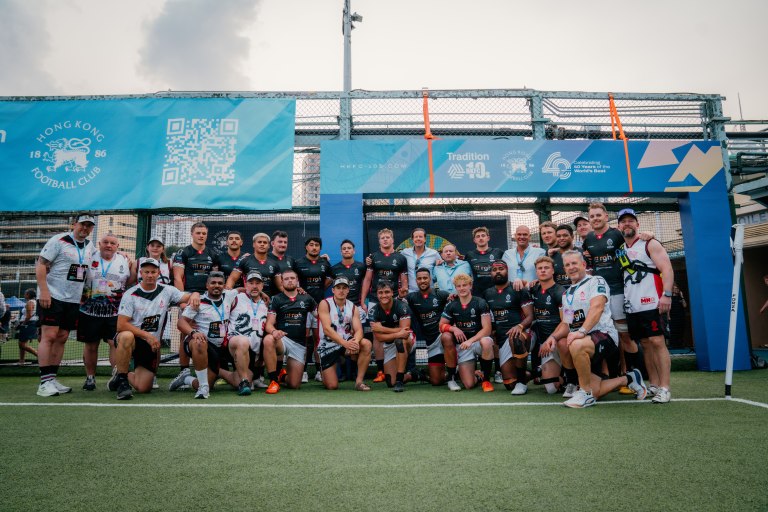
Shogun RFC is run entirely on donations and sponsorship and so wishes to thank RGH Global, Epitome, Tessen, MCM Partners, Hartfield Consultants, Mourant, Carnegies, Engage, Nova Films and all our other supporters for everything they do for the club. It isn’t possible without you.

Shogun RFC are supporting the MND Association as part of the 30th anniversary year – to donate to this incredible charity please click here – https://www.justgiving.com/page/shogunrfc-mndassociation

Clarity and Accountability: The Twin Engines of Execution Speed

High-performing teams don’t succeed despite complexity; they succeed by eliminating it. The teams that execute fastest aren’t necessarily those with the most resources or the brightest individuals. They’re the teams that excel at two fundamental disciplines—clarity and accountability.

The Friction of Ambiguity

Ambiguity is the silent killer of momentum. When team members lack clarity about objectives, roles, or priorities, every decision becomes a negotiation. Every action requires confirmation. The cognitive load of second-guessing consumes energy that should fuel execution.

Consider a product development team tasked with “improving user experience.” Without further definition, this objective spawns endless debate. Should they focus on speed, aesthetics, or functionality? Which user segments matter most? What constitutes improvement? The team spends weeks in discussion before a single line of code is written.

Contrast this with a team given clear parameters: “Reduce checkout abandonment rate from 35% to 20% within three months by simplifying the payment flow for mobile users.” Now everyone knows exactly what success looks like and can move decisively toward it.

The same principle applies across contexts. When strategic priorities are ambiguous, teams spend more time in meetings debating direction than executing against it. When roles lack definition, energy dissipates into territorial disputes rather than collaborative progress. Clarity eliminates this friction, allowing teams to channel their full capacity toward delivery.

Clarity as a Multiplier

Effective clarity operates at multiple levels:

Strategic clarity ensures everyone understands why the work matters and where it’s heading. This isn’t about elaborate vision statements—it’s about connecting daily activities to meaningful outcomes in ways that resonate.

Tactical clarity defines what success looks like for specific initiatives. Vague objectives generate vague efforts. Precise targets enable focused action.

Role clarity establishes who owns what decisions and deliverables. Overlapping responsibilities create bottlenecks; gaps create failures. High-performing teams invest time upfront defining clear ownership, which pays dividends in execution speed later.

Clarity must be active, not passive. It’s insufficient to document processes and assume understanding. Effective leaders continuously test, refine, and reinforce clarity through conversation and observation.

The Accountability Framework

Clarity without accountability generates understanding without urgency. Accountability transforms clarity into action.

Yet accountability often carries negative connotations—associated with blame, pressure, or surveillance. In high-performing teams, accountability functions differently. It’s a supportive framework that enables autonomy whilst maintaining standards.

True accountability has three components:

Ownership: Individuals must genuinely own their commitments, not merely be assigned them. This distinction matters profoundly. When people commit voluntarily to clear objectives, internal motivation drives performance. When they’re simply told what to do, compliance replaces commitment.

Visibility: Progress must be transparent to relevant stakeholders. This isn’t micromanagement; it’s creating shared situational awareness. When team members can see how their work connects to others’ efforts and overall progress, coordination happens naturally. Obstacles surface early. Support materialises proactively.

Consequence: There must be meaningful follow-through on commitments—both celebration of delivery and constructive address of shortfalls. Without consequence, accountability becomes performative. Teams quickly learn whether commitments are genuine or theatre.

The Speed Equation

When clarity and accountability operate together, execution speed increases exponentially, not linearly.

Consider the decision-making process. In teams lacking clarity, decisions require extensive consultation to establish context and alignment. In teams lacking accountability, decisions require multiple approval layers to distribute risk. Each step adds delay.

With robust clarity, team members possess the context to make decisions independently within their remit. With strong accountability, they’re empowered to act on those decisions without seeking permission. The decision cycle compresses from weeks to hours, or hours to minutes.

This manifests across every dimension of performance:

Problem-solving accelerates because root causes become visible faster when responsibilities are clear, and solutions implement faster when owners are accountable for outcomes.

Communication streamlines because clarity reduces misunderstanding and accountability ensures follow-through, eliminating the need for redundant checking and confirming.

Adaptation improves because clear objectives enable teams to adjust tactics as circumstances change without waiting for permission, whilst accountability ensures adjustments are intentional rather than haphazard.

Building the Foundation

Establishing clarity and accountability isn’t a one-time exercise; it’s an ongoing leadership commitment. Several practices prove consistently effective:

Regular calibration sessions where teams explicitly discuss and align on priorities, ensuring clarity doesn’t degrade over time.

Transparent progress reviews that focus on learning rather than judgement, reinforcing accountability whilst maintaining psychological safety.

Clear escalation protocols that define when and how issues should be raised, preventing both bottlenecks and abdication of responsibility.

Celebration of both delivery and process improvement, acknowledging that sustainable speed comes from continuously refining how work happens.

The Competitive Advantage

In today’s environment, where market conditions shift rapidly and competitive advantages erode quickly, speed of execution represents a decisive differentiator. Organisations that can identify opportunities and mobilise faster than competitors create compounding advantages.

That speed doesn’t come from working longer hours or cutting corners. It comes from the disciplined application of clarity and accountability—creating environments where talented people can deliver their best work at pace without unnecessary friction.

The principle remains constant across any context: clarity defines the path forward, accountability ensures you move along it, and together they generate the momentum that separates high performers from everyone else.

The question for any leader is simple: Are you providing the clarity your team needs to execute decisively? Are you maintaining the accountability framework that ensures commitments become reality? Because without both, you’re asking people to run a race blindfolded with their shoelaces tied together—and wondering why they’re moving slowly.


Mark Dean is the founder and director of Hartfield Consultants, specialising in leadership development, employee engagement, and strategic clarity.

Communication vs. Effective Communication: Bridging the Gap Between Intent and Impact

The email lands: “Important Changes to Company Procedures.” Three paragraphs outlining a new process starting Monday. No prior consultation. No opportunity for questions. No explanation of the why behind the change.

Leadership genuinely believes they’ve communicated. Employees feel blindsided. Both sides are frustrated.

Sound familiar?

The Unintentional Gap

Most leadership teams aren’t deliberately excluding people. They’re juggling competing priorities, working under pressure, and genuinely trying to move things forward. In that context, sending a clear memo or email can feel like effective communication.

And technically, it is communication. Information has been transmitted. The box is ticked.

But communication without engagement is just broadcasting—and broadcasting rarely achieves what we actually need: understanding, buy-in, and successful implementation.

What Gets Lost

When communication is one-way, several things happen:

Confusion spreads. Without context or opportunity to ask questions, people make assumptions and fill in gaps with their own interpretations.

Expertise goes untapped. The people doing the work often understand practicalities that those in the boardroom don’t see.

Resistance builds quietly. Not from malice, but because people naturally struggle to embrace changes they don’t understand or weren’t part of shaping.

Time gets wasted later. Instead of implementing smoothly, teams spend energy working out what the change actually means and dealing with avoidable problems.

The Three Missing Elements

Effective communication requires more than transmission. It needs:

1. Involvement in Decisions

When people help shape what needs doing and how it will be done, they bring valuable expertise and build ownership. Consultation doesn’t mean consensus on everything, but it does mean genuinely considering input from those closest to the work.

2. Engagement at Delivery

Real engagement means dialogue:

  • Explaining why, not just what
  • Creating space for questions and concerns
  • Being available to discuss implications
  • Acknowledging challenges honestly

Yes, this takes more time than sending an email. But it saves time by preventing confusion and resistance later.

3. Ongoing Feedback

Communication continues after delivery. Check understanding, create channels for questions, and remain open to adjusting based on practical experience.

The Real Cost

When we mistake broadcasting for communicating:

  • Projects falter because people don’t fully understand objectives
  • Good people disengage when they feel undervalued
  • Change fatigue sets in from constantly adapting to decisions made without them
  • Trust erodes slowly but steadily

What Better Looks Like

Leadership identifies a need and brings affected people into exploring solutions together. When decisions are announced, context is shared: the problem, the options considered, the reasoning.

Multiple channels exist for questions. Leaders make themselves available and actually listen. As implementation progresses, feedback shapes refinements.

The result? Change that sticks—not through compliance, but through genuine understanding and shared ownership.

Moving Forward

Leadership teams face genuine constraints: time pressure, competing priorities, commercial sensitivity around certain decisions. Not everything can or should be co-created.

But there’s a significant difference between “we can’t involve everyone in everything” and “we don’t need to engage people at all.”

The challenge isn’t choosing between speed and engagement—it’s recognising that time invested in genuine communication upfront prevents the greater time cost of managing confusion, resistance, and implementation failures later.

Consider where you currently sit on this spectrum. Are there opportunities to bring people in earlier, engage more meaningfully at delivery, or create better feedback loops?

Small shifts in approach can create significant improvements in outcomes.

Because ultimately, if the message hasn’t been understood and embraced, it doesn’t matter how clearly we think we’ve communicated it.


What’s your experience with organisational communication? Where have you seen it work well?

The Power Of Shared Experiences

There’s something magical that happens when colleagues become teammates after surviving their first group project deadline together, or when acquaintances transform into lifelong friends after traveling through a foreign country side by side. These moments highlight a fundamental truth about human connection: shared experiences are one of the most powerful catalysts for building meaningful relationships and expanding our understanding of the world.

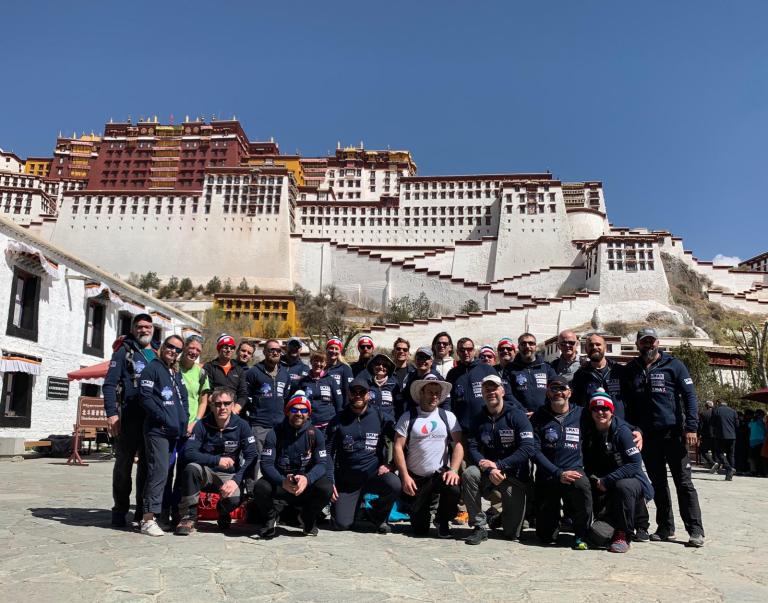
Shared experiences create the bedrock upon which deep friendships are built. When we go through something alongside another person—whether it’s playing rugby on Everest for charity, navigating a crisis at work, or simply spending regular coffee breaks together—we develop what psychologists call “shared episodic memories.” These common reference points become the stories we tell, the inside jokes we share, and the bonds that tie us together.

Unlike surface-level interactions, shared experiences require us to be present with others in authentic ways. We see how someone handles stress during a challenging climb, witness their sense of humor emerge during a personal disaster, or observe their kindness when helping a struggling teammate. These glimpses into someone’s true character form the foundation of genuine trust and affection.

Strengthening Teams Through Common Ground

In professional settings, shared experiences transform collections of individuals into cohesive teams and from cohesive teams into genuinely high performing teams. When colleagues participate in problem-solving exercises, attend conferences or training together, or even share the everyday struggles of a demanding project, they develop mutual understanding and respect that transcends job titles and departmental boundaries.

These common experiences create psychological safety—the sense that team members can be vulnerable, admit mistakes, and take risks without fear of judgment. A marketing team that has brainstormed through late nights together develops shorthand communication and instinctive collaboration that no amount of team-building presentations could achieve. They’ve seen each other’s work styles, learned to complement each other’s strengths, and built the trust necessary for innovation.

Broadening Perspectives Through Shared Discovery

Perhaps most importantly, shared experiences serve as powerful tools for expanding our worldview. When we encounter new situations alongside others, we gain multiple perspectives on the same events. Your travel companion might notice the architectural details you missed, while you pick up on the cultural nuances that escaped their attention. Together, you build a richer, more complete understanding of the experience.

This collaborative meaning-making extends far beyond travel. Book clubs, volunteer projects, learning new skills with others, or even navigating challenges as a community all provide opportunities to see the world through different lenses while maintaining the comfort of shared experience. We learn not just about the subject at hand, but about how different minds process, interpret, and find meaning in the same situations.

The Lasting Impact

The relationships forged through shared experiences tend to be remarkably durable. Decades later, college roommates still laugh about their freshman year adventures, military units maintain connections long after service, and colleagues from meaningful projects often become lifelong professional networks. These bonds persist because they’re built on authentic moments of connection rather than superficial interactions.

Moreover, the perspective-broadening effects of shared experiences create a compound benefit. Each new shared experience builds on previous ones, creating individuals who are more empathetic, adaptable, and open to different viewpoints. Teams that regularly engage in shared experiences become more innovative and resilient. Communities built around common experiences develop stronger social fabric and mutual support systems.

Creating Opportunities for Connection

The beauty of shared experiences is that they don’t require grand gestures or expensive adventures. Regular team lunches, neighborhood walking groups, hobby clubs, volunteer activities, or even shared challenges like learning new software together can all serve as catalysts for deeper connection and broader perspective.

The key is intentionality—actively seeking opportunities to do things with others rather than simply alongside them. Whether you’re looking to deepen existing friendships, strengthen your team at work, or expand your own worldview, the path forward often begins with a simple invitation: “Want to try this together?”

In our increasingly digital world, the power of shared experiences becomes even more valuable. While technology connects us across distances, there’s still something irreplaceable about facing challenges, celebrating victories, and discovering new things shoulder to shoulder with others. These moments of shared humanity remind us that despite our differences, we’re all navigating this world together—and that journey is always better with companions along the way.